What's The Difference Between Aimerce and Northbeam
Aimerce and Northbeam solve different problems. Aimerce fixes attribution at the data source level by capturing server-side first-party data and sending verified conversion signals to Meta and Google via Conversions API. Northbeam applies machine learning attribution modeling on top of existing data to give high-spend brands a cross-channel view of performance. For most Shopify DTC brands, Aimerce is the right starting point. Northbeam becomes relevant when multi-channel ad spend is significant enough to justify sophisticated attribution modeling.
The short answer: if your Meta Ads Manager shows fewer conversions than your Shopify orders, you need Aimerce first. If you already have clean conversion data and need to understand which channels deserve more budget, Northbeam adds value on top.
What Each Tool Actually Does
Aimerce
Aimerce is a server-side tracking platform built exclusively for Shopify. It captures ecommerce conversion events at the backend via Shopify's native API and webhook infrastructure, then sends enriched first-party data directly to Meta via Conversions API, Google via Enhanced Conversions, and Klaviyo via server-side event routing.
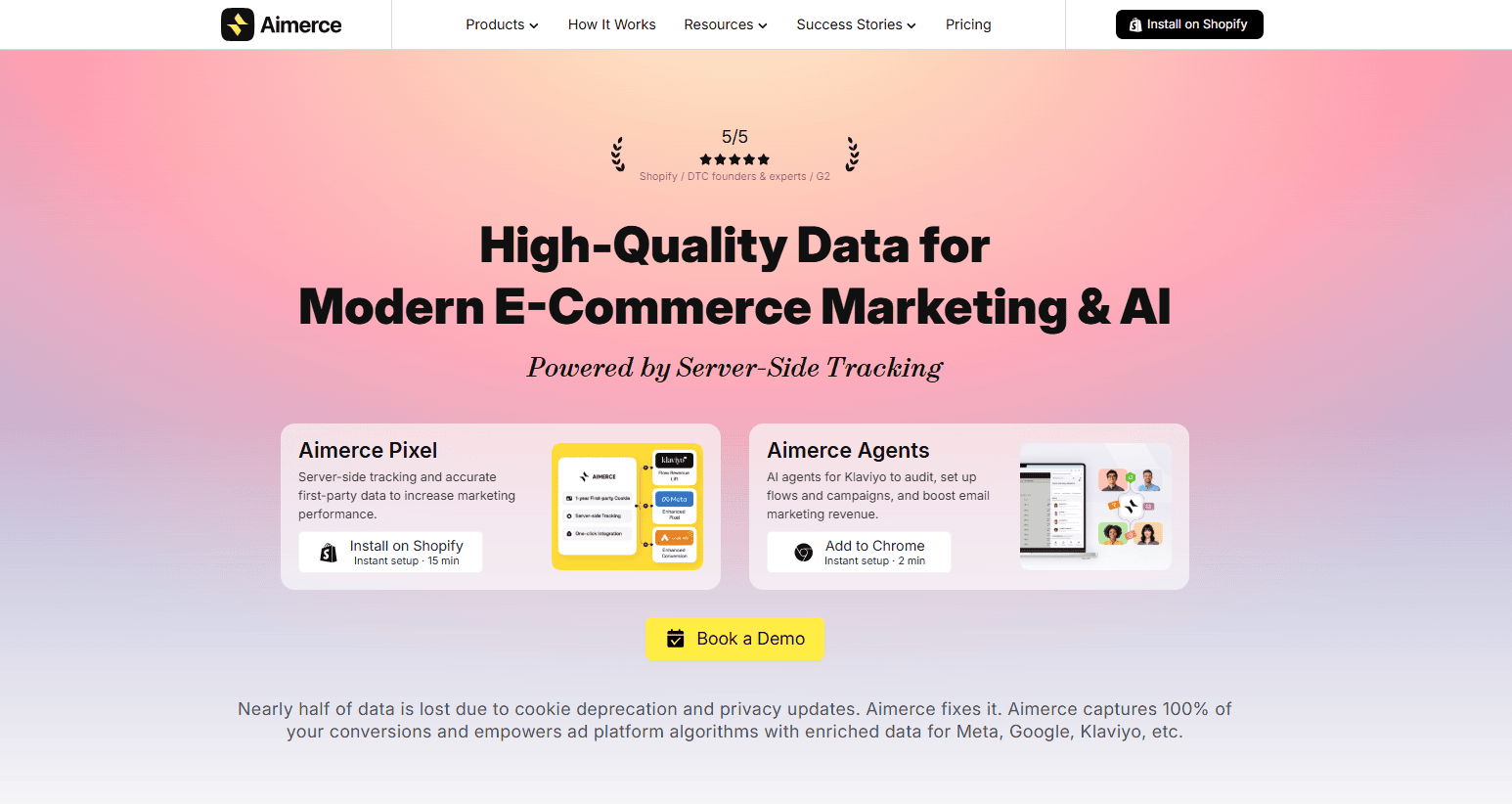
It solves the data completeness problem: recovering the 20% to 40% of purchase events that browser pixels lose to ad blockers, Safari ITP, and iOS App Tracking Transparency.
Northbeam
Northbeam is a multi-touch attribution platform for high-spend DTC brands running complex campaigns across Meta, Google, TikTok, and other paid channels simultaneously. It collects first-party data across all channels and applies machine learning models to distribute conversion credit across every touchpoint in the customer journey.
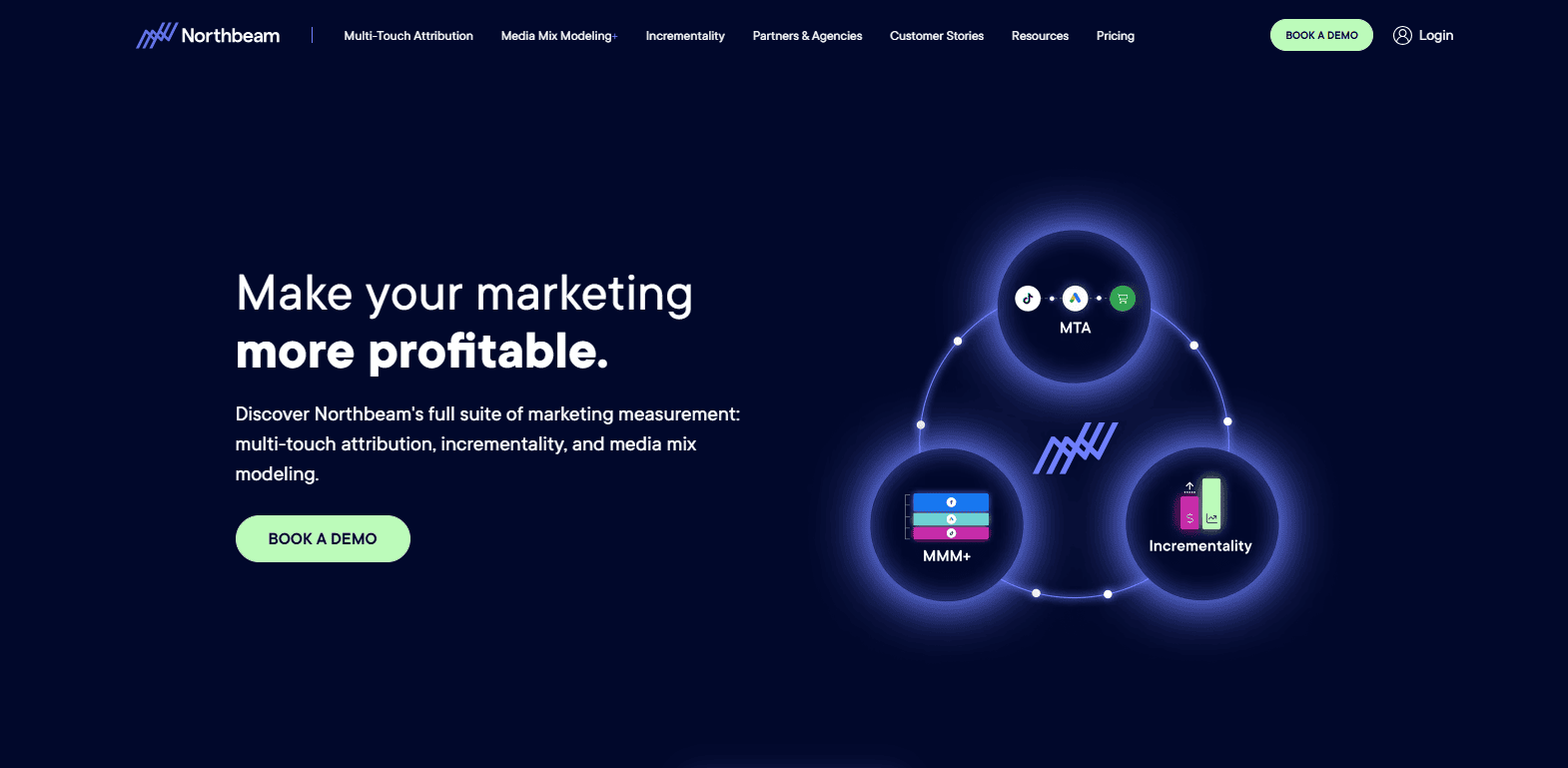
It solves the data interpretation problem: understanding which channels actually caused conversions rather than just which ones were present in the attribution window.
Head-to-Head Comparison
| Factor | Aimerce | Northbeam |
|---|---|---|
| Primary function | Server-side data collection and Conversion API | Multi-touch attribution modeling and reporting |
| What it fixes | Missing conversion data from browser restrictions | Attribution model accuracy across channels |
| Shopify native app | Yes, installs from App Store | No, requires integration setup |
| Meta Conversions API | Yes, native one-click | Yes, via integration |
| Google Enhanced Conversions | Yes, native one-click | Yes, via integration |
| Klaviyo server-side tracking | Yes, native | No |
| Bot filtering | Yes, built-in by default | Partial |
| Deduplication | Automatic via order_id | Partial |
| First-party data attribution | Durable ID, up to 1 year | Standard multi-touch |
| Attribution window | Up to 1 year with Durable ID | Standard model-based |
| Cross-channel attribution reporting | No (sends signals, does not report) | Yes, core feature |
| Incrementality testing | No | Yes |
| Creative performance reporting | No | No |
| Profit intelligence dashboard | No | No |
| Setup time | 15 minutes | Days to weeks |
| Developer required | No | Partial |
| Starting price | $299/mo | Custom pricing |
| Best for | Shopify DTC brands needing complete conversion data | High-spend brands needing cross-channel attribution modeling |
Where Aimerce Wins
Data completeness before modeling
This is the most important distinction between the two tools. Northbeam applies attribution models to whatever conversion data it receives. If that data is missing 30% of purchases because browser pixels are being suppressed by ad blockers and iOS restrictions, the model is making attribution decisions on incomplete inputs.
Aimerce fixes the underlying data before any model sees it. By capturing purchases at Shopify's backend via webhooks and sending them to Meta and Google via Conversions API, Aimerce ensures the conversion signals feeding both platform algorithms and any attribution tool are as complete as possible.
Running Northbeam without server-side tracking is like applying a sophisticated financial model to accounting records with missing entries. The model may be excellent, but the output is only as trustworthy as the input data.
Shopify-native setup
Aimerce installs directly from the Shopify App Store in 15 minutes with no developer required. It builds on Shopify's native API and webhook infrastructure rather than GTM tag logic, which means it stays stable through Shopify Checkout Extensibility updates and theme changes that break tag-based setups.
Northbeam requires a more involved integration process. For lean DTC teams, the implementation overhead is a meaningful consideration.
Klaviyo and email attribution
Aimerce routes server-side events directly to Klaviyo, ensuring abandoned cart and post-purchase flows trigger accurately even when browser scripts fail. Northbeam does not include Klaviyo integration as part of its core offering. For DTC brands where email is a significant revenue channel alongside paid media, this gap matters.
Bot filtering included
Aimerce removes non-human traffic at the server level before it reaches Meta, Google, or Klaviyo. Bot traffic representing 15% to 20% of site visits inflates conversion signals and pollutes custom audiences without filtering. Northbeam offers only partial bot filtering, which means its attribution models may include bot-influenced data.
Where Northbeam Wins
Cross-channel attribution modeling at scale
Northbeam is genuinely strong at what it is designed to do. For brands spending heavily across Meta, Google, TikTok, Pinterest, and other channels simultaneously, Northbeam's machine learning attribution models provide a cross-channel view that no single platform's native reporting can match.
Platform-native attribution is self-reported. Meta claims credit. Google claims credit. TikTok claims credit. The sum of their claimed conversions often exceeds your actual Shopify order count by a wide margin. Northbeam reconciles those claims into a single neutral attribution view.
Incrementality testing
Northbeam includes incrementality testing capabilities that help brands understand the true causal impact of each channel rather than correlational attribution. This is valuable for brands at the scale where attribution model accuracy meaningfully affects budget allocation decisions.
Multi-channel journey visualization
Northbeam shows the full customer journey across channels, revealing which channel combinations convert best and where the biggest attribution gaps exist. For brands managing eight-figure ad budgets across many channels, that visibility has real budget allocation value.
The Right Way to Think About Aimerce vs. Northbeam
These tools are not direct competitors. They operate at different layers of the same measurement problem.
Layer 1: Data collection (Aimerce's domain) Complete, accurate conversion events reaching Meta, Google, and Klaviyo via server-side infrastructure.
Layer 2: Attribution modeling (Northbeam's domain) Distributing credit across channels using multi-touch models once the data is collected.
The practical implication: Aimerce improves the inputs that both platform-native attribution and any third-party attribution tool like Northbeam uses. Northbeam does not improve the inputs. It models what it receives.
For most Shopify DTC brands the priority order is clear:
- Fix data collection first with Aimerce
- Add cross-channel attribution modeling with Northbeam when spend scale justifies it
Trying to use Northbeam's attribution models without solving data completeness first is the equivalent of optimizing a campaign's structure when the conversion tracking is broken. Fix the foundation. Build on top of it.
Who Should Choose What
| Your situation | Right choice |
|---|---|
| Meta Ads Manager shows fewer conversions than Shopify | Aimerce first |
| Browser pixel missing conversions from iOS or ad blockers | Aimerce |
| Klaviyo flows not triggering reliably | Aimerce |
| 15-minute setup, no developer available | Aimerce |
| Spending $10K or less per month on paid media | Aimerce |
| Need Shopify-native app installation | Aimerce |
| Spending heavily across 3 or more paid channels | Northbeam |
| Need neutral cross-channel attribution modeling | Northbeam |
| Need incrementality testing at scale | Northbeam |
| Need to justify budget allocation to a CFO or board | Northbeam |
| Both data completeness and cross-channel modeling needed | Aimerce plus Northbeam |
Can You Use Both Together?
Yes, and for high-spend brands this is often the right answer.
Aimerce handles the data collection layer: capturing server-side purchase events, enriching them with first-party data, sending them to Meta and Google via Conversions API, and routing behavioral events to Klaviyo. This gives every downstream tool, including Northbeam, more complete and more accurate data to work with.
Northbeam handles the attribution modeling layer: taking that complete data and applying multi-touch models to understand cross-channel contribution.
The combination produces more reliable attribution outputs than Northbeam alone because the inputs are cleaner. Brands that run Northbeam on top of browser-pixel-only data are modeling incomplete inputs. Brands that run Northbeam on top of Aimerce server-side data are modeling the most complete picture available.
Frequently Asked Questions
What is the difference between Aimerce and Northbeam? Aimerce is a server-side tracking platform that fixes attribution by capturing complete conversion data at Shopify's backend and sending verified first-party signals to Meta via Conversions API and Google via Enhanced Conversions. Northbeam is a multi-touch attribution platform that applies machine learning models to existing conversion data to distribute credit across paid channels. Aimerce improves data inputs. Northbeam improves data interpretation.
Is Aimerce better than Northbeam for Shopify? For most Shopify DTC brands, Aimerce is the higher-priority investment because it solves the data completeness problem that Northbeam's models cannot fix. If browser pixels are missing 20% to 40% of purchase events, Northbeam's attribution outputs are based on incomplete data regardless of how sophisticated the models are. Northbeam becomes the stronger choice for high-spend brands that already have complete conversion data and need cross-channel attribution modeling.
Does Northbeam replace server-side tracking? No. Northbeam applies attribution models to whatever conversion data it receives but does not capture or improve that data at the source. Server-side tracking tools like Aimerce improve data completeness by recovering purchase events that browser pixels miss. Running Northbeam without server-side tracking means the attribution models are working from an incomplete dataset.
What is the best attribution tool for Shopify in 2026? Aimerce is the best attribution tool for most Shopify brands because it fixes attribution at the data source level. For brands running significant spend across multiple channels that need cross-channel attribution modeling, Northbeam is the specialist choice for that layer. The strongest setup for high-spend Shopify brands combines both: Aimerce for server-side data collection and Northbeam for cross-channel attribution modeling.
Does Aimerce have cross-channel attribution reporting like Northbeam? No. Aimerce sends verified conversion signals to Meta, Google, and Klaviyo and improves the data those platforms use for optimization and reporting. It does not provide a unified cross-channel attribution dashboard. Northbeam provides that dashboard. For brands that need both clean conversion data and cross-channel reporting, using both tools together covers both needs.
What is Northbeam used for? Northbeam is used by high-spend DTC brands to understand cross-channel attribution across Meta, Google, TikTok, and other paid channels simultaneously. It applies machine learning models to distribute conversion credit across all touchpoints in the customer journey rather than using last-click or platform self-reported attribution. It also includes incrementality testing for brands that need to measure the true causal impact of each channel.
Aimerce or Northbeam?
Aimerce and Northbeam serve different layers of the same measurement problem. Aimerce fixes what goes into attribution. Northbeam improves how attribution is interpreted.
For the majority of Shopify DTC brands, Aimerce is the right first investment because data completeness is the foundational problem. Incomplete conversion data makes every attribution model less reliable, including Northbeam's. Fix the data first.
For high-spend brands that have already solved data completeness and need sophisticated cross-channel attribution modeling across many channels simultaneously, Northbeam is a strong specialist tool for that layer.
The brands with the most accurate attribution in 2026 are running both: Aimerce capturing complete server-side first-party data and Northbeam modeling the cross-channel picture on top of that clean foundation.

Try Aimerce Pixel Risk-Free
for 30 Days
Most teams see results within 2 weeks.
Money-back guarantee.
It pays for itself, or you don't pay anything.
30-Day Aimerce Pixel Free Trial