If you have logged into Ads Manager recently, you have likely noticed that the buttons for manual targeting are slowly disappearing, replaced by sleek, automated options like Advantage+ Shopping Campaigns (ASC). This isn't just a UI update but a fundamental change in how performance marketing works.
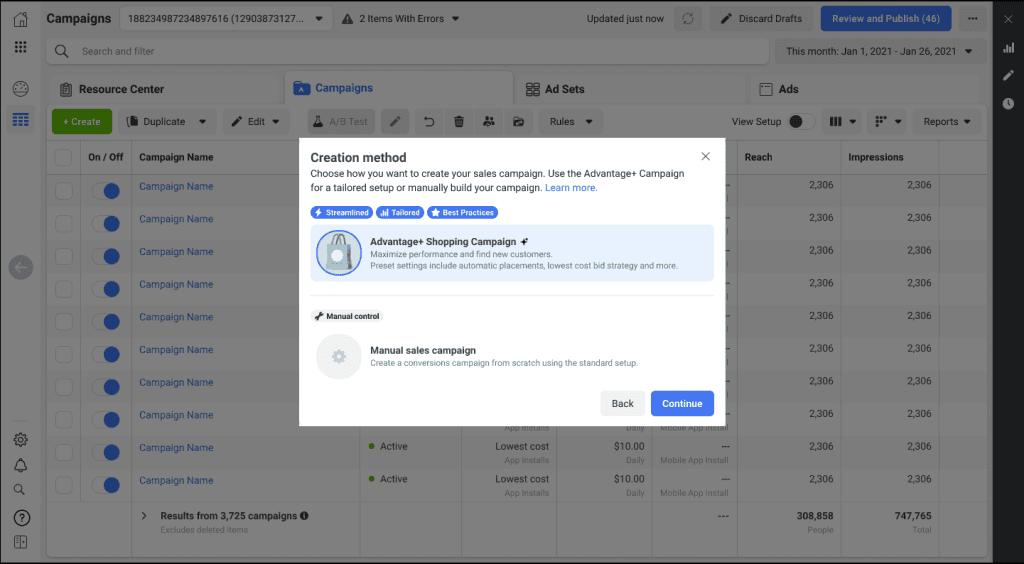 Source: Meta
For years, media buyers prided themselves on finding "hidden" interest groups or perfectly layering lookalike audiences. We had specific ad sets for "dog lovers who also like hiking" or "parents of toddlers in California." But today, top DTC brands and DTC startups alike are facing a different landscape. The direction from Meta is clear. They want fewer decisions made by humans and more decisions made by their AI.
But handing over the keys to the algorithm can feel risky. How do you ensure it drives real growth and not just vanity metrics?
Here is how to adapt your strategy to win with Advantage+ Shopping without handing over the keys to your business blindly.
The Rise of Automation in Meta Ads
Why is Meta pushing automation so aggressively right now?
It boils down to two main factors: signal loss and scalability.
Since the rollout of iOS 14+ and the tightening of browser privacy standards, the "old-school" way of tracking users relying heavily on third-party cookies and pixel fires has become unreliable. When platforms lose visibility into user behavior, deterministic targeting (targeting exact users based on exact actions) gets weaker.
To compensate, Meta has rebuilt its engine to rely on modeled signals and conversion feedback loops. Automation allows the platform to ingest vast amounts of data, predict user intent, and optimize ad delivery in real-time far faster than any human media buyer could.
The benefits of this shift are clear:
- Simpler Management: You no longer need to manage dozens of ad sets and audience permutations.
- Better Discovery: The algorithm can find buyers outside your "obvious" segments, often reaching people you never would have thought to target manually.
- Faster Iteration: With targeting handled by AI, you can focus on what actually moves the needle: creative strategy and offer testing.
What You Lose with Manual Targeting
Automation isn't magic, and it isn't without its downsides. It simply shifts where the work happens.
When you move to Advantage+ Shopping, you lose predictability. Performance can swing day-to-day as the system explores new pockets of inventory. You also lose clear segmentation; it’s much harder to say "this ad set is specifically for 25-34-year-old men interested in hiking."
Perhaps the biggest loss for control freaks (we say that with love) is the lack of manual guardrails. In a fully automated setup, you have fewer ways to force budget into specific areas. If the algorithm decides that retargeting your past site visitors is the easiest way to get a cheap conversion, it will spend there even if you wanted to prioritize new customer acquisition.
However, manual control still has a place. It remains crucial for:
- Offer Constraints: If you have strict margins and can't afford to acquire customers above a certain CPA.
- Catalog Strategy: Curating which products are eligible to ensure you aren't burning budget on low-stock items.
- Creative Angles: Using specific messaging to "call out" different buyer personas since you can't target them directly.
So, How Do You Adapt Without Losing Control of Your Growth?
1. Consolidate Where Possible
A common mistake is trying to rebuild legacy account structures inside an automated world. Don't create five different Advantage+ campaigns for the same product line.
Instead, consolidate. The algorithm feeds on data. The more data (conversions) you can funnel into a single campaign, the faster it learns and the more stable your performance will be. Only split campaigns when you have a genuine business reason, such as vastly different profit margins or distinct fulfillment constraints.
2. Treat Creative as Your Targeting Lever
In a world of broad targeting, your creative is your targeting. If you want to reach luxury buyers, your creative needs to signal luxury.
Build a creative system that tests 3–5 core angles (e.g., problem/solution, social proof, urgency) and different formats. Let the creative self-select the right shopper. If a specific "giftable" angle takes off, you know the algorithm has found a pocket of gift-buyers, even if you didn't explicitly target them.
3. Guide the Algorithm with Product Sets
If Meta chooses the audience, you can still influence what it sells. Use product sets to steer the algorithm.
- Bestsellers: Great for stabilizing performance and scaling volume.
- High-Margin SKUs: Use this product set to protect profitability.
- Seasonal Collections: Prevent budget dilution by focusing spend on timely items.
4. Keep Retargeting Honest
Automation can blur the line between prospecting and retargeting. To avoid over-crediting "easy" conversions, keep a close eye on the frequency and the share of spend going to existing engagers.
5. Prioritize Conversion Signal Quality
This is the most critical step. In an automated system, the algorithm is only as smart as the data you feed it. If your Shopify store is suffering from signal loss due to ad blockers or browser restrictions (like Safari's 7-day cookie cap), you are essentially starving the algorithm.
To win with Advantage+, you need robust Shopify server-side tracking. By implementing server-side tagging on Shopify, you ensure that purchase events and user data are sent directly from the server to Meta, bypassing browser issues. This improves the "Event Match Quality" score, giving the AI the accurate feedback loop it needs to optimize.
Companies like Aimerce specialize in this exact area, offering attribution tracking and tracking pixel audits to ensure your data pipeline is clean. Without accurate data, automation is just guessing.
Testing and Measurement: Ensuring Success
Automation needs room to learn, but you still need a disciplined testing framework.
- Define One Metric - Don't try to optimize for everything. Pick one success metric (e.g., Cost Per Purchase or Contribution Margin) and stick to it.
- Run Clean A/B Tests - Keep variables consistent. If you're testing Advantage+ against a manual campaign, ensure the creative is comparable.
- Allow for Time - Short tests often measure the "exploration" phase, not the "optimization" phase. Give the system enough time and conversion volume to stabilize.
- Measure Beyond ROAS - Platform-reported ROAS can be misleading, especially with offline conversions API data or delayed attribution. Look at your blended metrics (MER) and Shopify revenue to gauge the true impact on your bottom line.
Common Pitfalls to Avoid
Even smart brands get tripped up. Here are a few traps to watch out for:
- Starving the Algorithm - Spreading your budget too thin across too many small ad sets prevents the system from getting enough data to exit the learning phase.
- Judging Too Quickly - Panic-pausing a campaign after 24 hours of bad performance doesn't give the AI a chance to correct course.
- Ignoring Data Quality - Overlooking tracking pixel audits and failing to implement bot filtering. If you feed the algorithm junk data (like bot traffic), it will optimize for junk traffic.
- Over-Trusting Attribution - Meta will always claim credit for as much as possible. Use tracking and attribution tools to verify which channels are actually driving incremental growth.
Conclusion
Meta Advantage+ Shopping isn't just a new feature; it's the future of the platform. While it requires letting go of some manual control, the potential for scale and efficiency is undeniable.
However, success isn't automatic. It requires a balanced approach: combining the power of AI with strategic human inputs on creative, catalog management, and data quality.
If your pixel and server-side setup aren’t sending clean signals to Meta, you’re not just missing data you’re wasting money. Ensuring you have robust Shopify server-side tracking and clean attribution is the foundation of modern media buying.
Aimerce helps DTC startups and established brands alike audit their tracking, implement server-side tagging, and recapture lost revenue. Because in the age of automation, he with the best data wins.
30-Day Aimerce Pixel Free Trial