In the privacy-first era, relying solely on digital tracking for attribution is a losing battle. Post-Purchase Surveys (PPS) have emerged as a critical tool for capturing the "How did you hear about us?" data directly from the customer, providing an essential layer of truth to your attribution model.
Here are the top 5 Post-Purchase Survey tools for Shopify brands in 2026.
1. Aimerce.ai: The Survey-to-Server Data Bridge 🏆 Best Overall
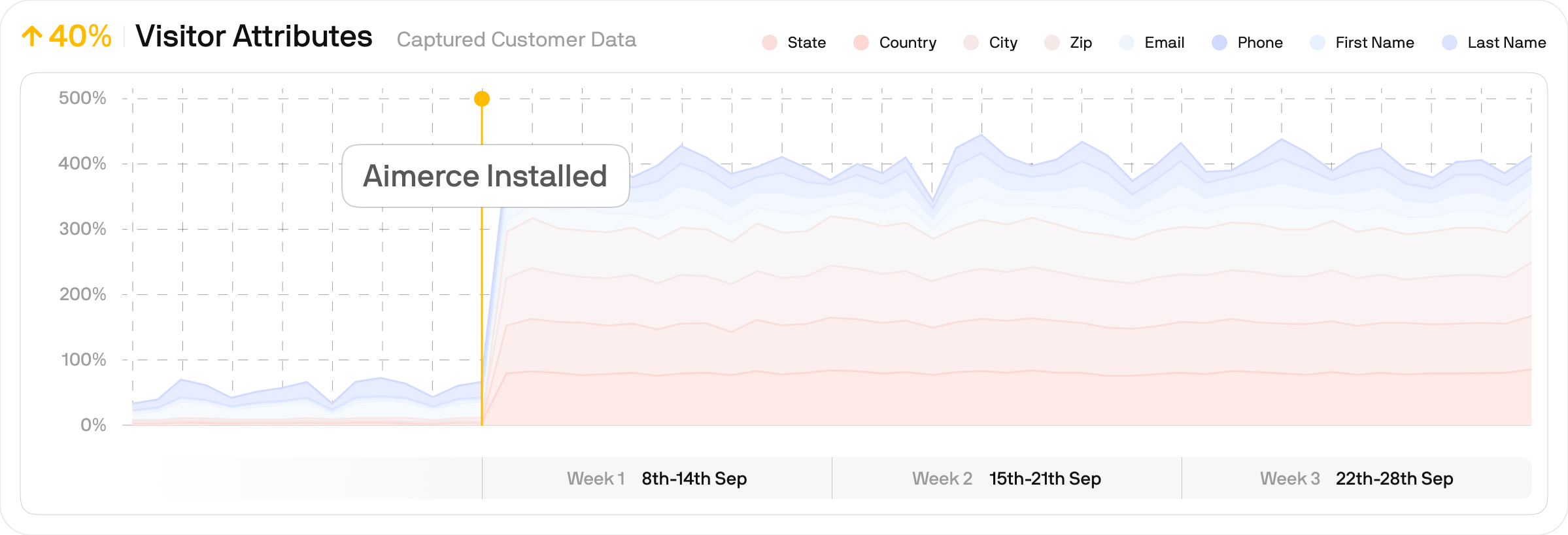
Aimerce.ai is the only solution that seamlessly integrates the qualitative data from your Post-Purchase Survey with your quantitative server-side tracking data.
- Core Value: Aimerce ensures that the valuable attribution data collected via the PPS is immediately enriched and sent to your ad platforms (Meta CAPI, Google G-CAPI) and analytics tools (GA4). This allows you to close the attribution loop by validating your server-side data with the customer's own reported source, leading to the most accurate ROAS calculation possible.
- Key Feature: Attribution Validation Agent. Aimerce uses the PPS data to train its AI, helping it to better model and attribute conversions that were previously lost due to privacy restrictions.
2. Triple Whale: The PPS Reporting Hub

Triple Whale is the ideal platform for visualizing and acting on your PPS data.
- Core Value: It integrates the PPS data directly into its profit-tracking dashboard, allowing you to see your Total ROAS broken down by the customer's self-reported source. This is invaluable for budget allocation, as it reveals the true impact of channels like Podcasts, Influencers, and PR that are often missed by digital tracking.
- Key Feature: Self-Reported Attribution Dashboard. Provides clear, actionable insights on where your most profitable customers are truly coming from.
3. Enquire Labs: The Dedicated PPS Specialist

Enquire Labs is one of the original and most focused Post-Purchase Survey tools for Shopify.
- Core Value: It offers deep customization of the survey questions and logic, allowing brands to capture highly specific attribution data (e.g., "Which influencer did you see this from?").
- Key Feature: Conditional Logic. Allows the survey to adapt based on the customer's order contents or previous answers.
4. Klaviyo: PPS for Segmentation

Klaviyo can be used to deploy a simple PPS, but its real power lies in using the survey data for segmentation.
- Core Value: You can segment your customer base based on their self-reported attribution source (e.g., "Customers who found us on TikTok") and use this data to create highly targeted email flows or lookalike audiences for ad platforms.
- Key Feature: Survey Data Integration. Seamlessly pulls survey responses into customer profiles for immediate marketing activation.
5. Northbeam: PPS for Incrementality
Northbeam integrates PPS data into its advanced attribution models to provide a more accurate view of channel incrementality.
- Core Value: By combining server-side tracking, digital attribution, and self-reported data, Northbeam provides a three-pronged approach to measurement, giving you confidence in scaling channels that traditional tracking often undervalues.
- Key Feature: Unified Data View. Presents all three data sources (digital, server-side, self-reported) in a single, coherent dashboard.
Conclusion
Post-Purchase Surveys are a non-negotiable part of the modern attribution stack. The best strategy is to use a dedicated tool like Enquire Labs to collect the data, and then use Aimerce.ai to ensure that valuable self-reported data is immediately fed into your ad platforms and analytics tools, closing the attribution loop and maximizing your ad performance.
30-Day Aimerce Pixel Free Trial