You launch a new campaign. The creative is fresh, the copy is sharp, and you are ready to scale. But three days later, you see the dreaded status in your Ads Manager delivery column.
Learning Limited.
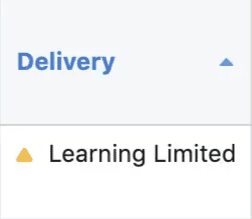
This learning phase status feels like a penalty box. When an ad set is in the learning phase, the delivery system is still figuring out who is most likely to take your desired action. That experimentation is normal. It’s the delivery system saying, "I’m trying to find your people, but I don’t have enough data yet.”
For DTC startups and established brands alike, this status often leads to panic. You might be tempted to kill your ads campaign, slash budgets, change audiences, or swap out creatives immediately. But reacting too quickly can actually make things worse.
Let’s find out a way to get to stable delivery faster without choosing the wrong goal just to exit the learning phase. We will explore how to manage your ecommerce events, optimize your budget, and ensure your tracking and attribution are solid enough to feed Meta the data it needs.
Understanding the Learning Phase
To fix the problem, you first have to understand the mechanism. Most modern ad delivery systems rely on conversion feedback loops. When you launch an ad set, the algorithm does not yet know who your perfect customer is.
During the learning phase, the system tests different pockets of the audience to learn three specific things:
- Who is likely to convert.
- Which placements and contexts perform best.
- How to pace your budget throughout the day.
The algorithm needs positive reinforcement to learn. Every time a user completes your optimization event, whether that is a purchase or a lead, it sends a signal back to the system. This signal tells the algorithm, "More people like this, please."
If you do not send enough signals, the system cannot learn. It is like trying to learn a new language but only hearing one word a day. You will never become fluent.
This is where Aimerce becomes a critical partner for your growth. If your data pipeline is broken, you are starving the algorithm. By implementing server side tracking Shopify stores rely on, you ensure that every single signal reaches the ad platform.
The 50-Event Rule
How much data is enough? To exit the learning phase, an ad set generally needs to accumulate roughly 50 optimization events within a 7-day period.
If you are optimizing for a deep-funnel event like a purchase, achieving 50 events in a week requires two things: substantial budget and high-quality tracking.
Let's do a quick reality check on your current campaigns. Look at your active ad sets.
- If you are at 44 events in the last 5 days, you are close. Often the best move is to hold steady and let it finish learning.
- If you are at 12 events in 5 days, you are not close. You likely need structural changes or a budget increase.
This volume requirement is why tracking pixel audits are so important. If you are actually generating 50 sales, but your pixel only reports 35 of them due to browser restrictions or ad blockers, you will remain stuck in the learning phase. Aimerce solves this by using server side tagging Shopify integrations to bypass browser limitations, ensuring your ad manager sees the full picture.
Decoding 'Learning Limited'
"Learning Limited" is not a penalty. It is a diagnosis.
It simply means the system is not receiving enough of your chosen optimization event in a reasonable window. The delivery system has predicted that, at your current pace, you will not hit the 50-event threshold.
When you see this status, it usually stems from one of three issues:
- Budget is too low: You are not spending enough to buy 50 conversions.
- Audience is too small: The pool of people is not large enough to find 50 converters quickly.
- Bid is too low: If you are using cost caps, your bid might be keeping you out of the auctions you need to win.
The practical takeaway here is that you do not optimize your way out with tiny tweaks. You either generate more of the right events or simplify the structure so events accumulate faster per ad set.
Strategic Budgeting
If the system needs roughly 50 optimization events in about a week, you can calculate the exact budget required to succeed. This removes the guesswork from your media planning.
Here is how to calculate your necessary spend based on your specific optimization goals.
The Formula:
(Cost per Optimization Event x 50) / 7 = Daily Budget
Let's look at an example. Imagine you are one of the top DTC brands selling luxury goods.
- Your Cost Per Purchase (CPA) is $40.
- You need 50 purchases to exit learning.
- Total weekly spend needed: 50 x $40 = $2,000.
- Daily budget needed: $2,000 / 7 = ~$285 per day.
If your daily budget is set to $50, you will likely never exit the learning phase because the math simply does not work. You are asking the system to learn without giving it the tuition money.
Important nuance: This is a planning tool, not a promise. Costs can improve after learning, but you typically need enough volume first. If the budget requirement is too high for your current cash flow, you need to look at consolidation.
“But I Can’t Reach the Required 50 Conversions”
Instead of optimizing for "Purchase," switch to "Add to Cart" or "View Content."
The logic seems sound. It is much easier and cheaper to get 50 Add to Carts than 50 Purchases. You will exit the learning phase quickly, and the delivery column will say "Active." This gives the system more data to learn from so it can find your audience faster.
Although optimizing for a higher-funnel event, you are training the algorithm to find window shoppers, not buyers. Lots of carts, but very few sales. But once the ad set stabilizes, you can switch back to your main ecommerce conversion tracking goal which is the Purchase.
- Higher-funnel events (Page Views, Add to Cart) exit learning faster but reduce downstream efficiency.
- Lower-funnel events (Purchase) align with revenue but require more volume.
For ecommerce conversion tracking, you must stay disciplined. If your business goal is sales, optimize for the purchase. To make this work, you need to ensure your data capture is pristine. Tools like Aimerce help by providing accurate conversion tracking ensuring that when a purchase happens, so Meta will know your ads work and will find you more people who are likely to purchase. Your server side tracking app on Shopify will pay for itself.
Campaign Consolidation
If you have the budget but are still stuck, the issue is likely fragmentation. A common reason campaigns get stuck is having too many ad sets splitting the budget.
Imagine you have a $200 daily budget.
- Scenario A: You have 1 ad set. It gets $200/day. It generates 10 sales/day. In 5 days, you have 50 sales. You exit the learning phase.
- Scenario B: You have 10 ad sets. Each gets $20/day. Each generates 1 sale/day. After 5 days, each ad set only has 5 sales. All of them are stuck in Learning Limited.
To fix this, you need to consolidate. Reduce the number of ad sets. Combine similar audiences rather than isolating tiny segments.
For example, instead of having separate ad sets for "Interest Group 1," "Interest Group 2," and "Interest Group 3," combine them into a single "Broad Interests" ad set. This pools your budget and your data into one bucket, allowing ecommerce events to accumulate faster.
This consolidation strategy is standard practice for fastest growing DTC brands. They understand that signal density is more important than granular segmentation.
The Danger of Over-Optimization
Many teams accidentally keep campaigns in perpetual learning by making "helpful" changes too often. We call this over-optimization.
When you edit an active ad set, you risk resetting the learning phase. The algorithm treats the edited ad set as a brand-new entity and starts the learning process from scratch.
Common changes that trigger a reset include:
- Large budget swings (usually increasing budget by more than 20% at once).
- Significant changes to targeting or audience.
- Adding new ads into an active ad set.
- Pausing the ad set for 7 days or longer.
If you are constantly tweaking your ads every two days, you are never letting the system stabilize. You are stuck in a cycle of volatility.
To avoid this, use a "preload" workflow. When launching, create multiple ad variations up front. Keep only a couple active initially. If performance is weak, turn off the losers and turn on the preloaded alternatives. This allows you to iterate without constantly re-triggering the learning process with new uploads.
Best Practices for Changes
Sometimes you simply must make changes. Perhaps your creative is fatigued, or you need to scale spend aggressively for a sale. When that happens, use controlled relaunches.
Instead of editing a live ad set, duplicate it. Apply your changes to the duplicate whether that is a new budget, new creative, or tracking parameter updates like offline conversions api integration. Launch the duplicate and let the original run until the new one picks up steam.
This keeps your tests cleaner and prevents the turbulence of mixed edits.
The Role of Data Quality in Exiting Learning
We have discussed budget and structure, but we need to address the invisible variable: Data Quality.
You cannot exit the learning phase if your data is leaking.
In the current landscape, relying solely on browser-based pixels is risky. Ad blockers, iOS updates, and connectivity issues mean that many e-commerce events never make it back to Meta. If you lose 20% of your data, you effectively raise your CPA by 20% and make it 20% harder to hit the 50-event threshold.
This is why how to implement server-side tracking is a trending topic for grow nyc ecommerce communities.
Aimerce provides the infrastructure to solve this.
- Server Side Tracking: By implementing server side tracking Shopify stores can send data directly from the server to Meta, bypassing browser issues.
- Bot Filtering: Bot filtering ensures that the algorithm is not optimizing for non-human traffic. If a bot clicks your ad and fires a pixel, the algorithm thinks, "I need to find more users like this." This creates a death spiral of low-quality traffic. Aimerce cleans your data before it hits the ad platform.
- Attribution Accuracy: With better attribution tracking, you can verify which ads are truly driving value. This gives you the confidence to consolidate budgets into the winners.
Getting Unstuck
Getting stuck in the learning phase is frustrating, but it is solvable. It requires a shift in mindset from "hacking" the algorithm to feeding it.
Remember the checklist:
- Do the math: Ensure your budget is realistic for your CPA.
- Consolidate: Combine audiences to increase signal density.
- Stick to the goal: Optimize for purchases, not clicks. If you can’t reach the 50/week conversion goal, optimize to ATC (add to cart) or IC (Initiate Checkout).
- Stop tinkering: Let the ads run for at least 7 days before making major changes.
- Fix your data: Ensure every conversion counts.
Whether you are one of the most popular DTC brands or just starting out, the physics of the ad auction remain the same. The algorithm craves data.
If you suspect your data pipeline is holding you back, look at your infrastructure. Auditing tracking pixels and upgrading to server-side solutions can be the difference between "Learning Limited" and "Active."
30-Day Aimerce Pixel Free Trial