
If you are running Meta ads right now, you know the landscape has shifted. For many DTC startups and high-ticket service providers, the standard "direct to offer" campaign, where you push a cold audience immediately to a sale, is burning cash faster than ever. If you sell impulse-buy products, that model might still work. But if your product requires trust, expertise, or a higher investment (think luxury toy x or bespoke consulting), you can’t just ask for the sale on the first date.
You need a different approach. You need to become famous to your specific target audience.
This is where the Omnipresent Content Strategy comes in, developed by Ben Heath. It’s a method designed to build a deep relationship with your prospects over time, mimicking the way real friendships are formed: through frequent, varied, and valuable interactions.
Instead of pestering people with the same "Buy Now" ad until they block you, you show up with value, demonstrations, and testimonials. You become the authority they trust, so when they are ready to buy, you are the only logical choice.
What is Omnipresent Content?
Think about your best friend. You didn't become best friends after meeting once for five minutes. You became friends after hanging out hundreds of times in different contexts, as you met for coffee, dinner, stressful situations, and fun times.
The Omnipresent Content Strategy applies this logic to advertising. The goal isn't to blast your ad to millions of people once. The goal is to reach a specific, curated group of people (your warm audience and ideal prospects) consistently over a long period. By using a specific structure of 14 different ads delivered on a rotating schedule, you ensure your audience sees you roughly twice a day, every day, but and this is crucial, they see different content every time. They don't get ad fatigue; they get value.
Whether you are one of the fastest growing dtc brands or a local service business, this strategy shifts your marketing from "annoying interruption" to "welcome guest."
Choose Your Objective: Awareness vs. Engagement
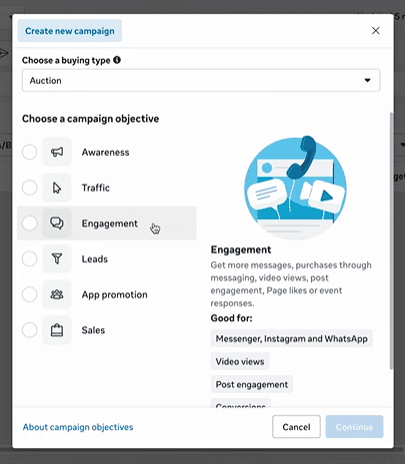
When setting up this campaign in Ads Manager, your first decision is the campaign objective. Historically, "Awareness" was the only choice for this strategy, but recent updates have made "Engagement" a viable contender.
How do you choose? It comes down to the size of your target market.
- Awareness: Best for broader target markets. If you are one of the top dtc brands or selling a product with mass appeal, Awareness allows you to cast a wider net. Engagement: Best for niche markets. If you operate in a specific locality or a highly specialized hobbyist niche, Engagement ensures you are reaching people likely to interact.
- The Golden Rule: Whichever you choose, you must be able to control frequency. Previously, frequency capping was exclusive to Awareness, but it is now rolling out to Engagement objectives. If your Engagement campaign doesn't allow for frequency capping, stick to Awareness.
Structure the Campaign
This strategy breaks many conventional rules of Facebook advertising. If you follow Meta’s default recommendations (like "consolidate your ad sets"), this strategy will fail. You need rigid control to ensure the user experience is "omnipresent" rather than chaotic.
- Stick to Auction Bidding You will see an option for "Reservation" buying type. Avoid it. While Reservation can lock in lower CPMs (cost per thousand impressions), it often comes at the expense of quality. You don't just want cheap eyeballs; you want quality prospects. Stick to the Auction buying type to ensure your ads are shown to users who are actually likely to care about your business.
2.Advantage Campaign Budget: Turn It OFF This is non-negotiable. The default setting is usually "On" (formerly CBO), where Meta decides how to distribute your budget across ad sets. For Omnipresent Content, you must turn Advantage Campaign Budget OFF.
Why? Because we are going to create 14 separate ad sets, and we need to force the system to spend a small, equal amount on each one. If you leave Advantage Campaign Budget on, Meta will identify one "winning" ad and dump 90% of your budget into it. That destroys the strategy. You want your audience to see the full spectrum of your content value, testimonials, and offers, not just the one ad that gets the most clicks.
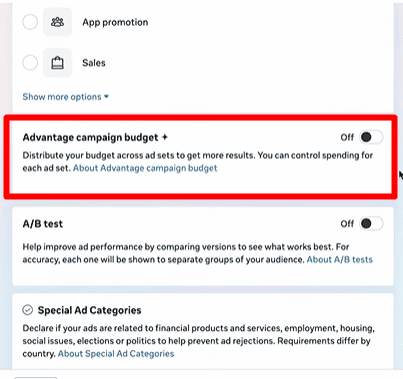
- No A/B Testing Do not toggle on A/B testing. We aren't testing to see which ad "wins" so we can turn the others off. We are building a library of content that works together as a system. The variety is the strategy.
Maximize Reach and Control Frequency
Once you are at the ad set level, your setup determines the success of the campaign.
- The Performance Goal - You must select "Maximize reach of ads". We aren't optimizing for clicks or conversions here (though those will happen). We are optimizing to ensure the specific people in our audience see our message.
- Understanding Ad Frequency - Frequency is the average number of times a person sees your ad. In a standard campaign, a high frequency usually means you are annoying your audience. In an Omnipresent campaign, high frequency is the goal if the content varies.
This is where the magic number comes in: 1 Impression Every 7 Days. You will create 14 different ad sets. Inside each ad set, you will place one single ad. You will then set the frequency cap for that ad set to "1 impression every 7 days."
Here is the math:
- 14 Ad Sets
- 1 Ad per Ad Set
- Each Ad shown once a week to a user.
- Result: The user sees 14 ads per week, or an average of 2 ads per day.
Because the ads are different, the user feels like you are everywhere (omnipresent) without feeling spammed.
Target and Track
Who should see these ads? Ideally, your "warm" audiences. These are people who have visited your website, engaged with your Instagram ai generated scene reels, or are on your email list.
Because this strategy relies on long-term relationship building, measuring success can be tricky. You won't always see a direct "click-to-purchase" correlation on day one. This is why tracking and attribution are critical.
The Data Challenge
For dtc startups and established top dtc companies alike, relying solely on Meta’s default reporting can be misleading. You need to ensure your data pipeline is clean.
This involves:
- Tracking pixel audits: Ensure your pixel isn't double-counting or missing events.
- Server-side tracking Shopify: If you are on Shopify, client-side tracking is no longer enough due to browser privacy restrictions. You need shopify server side tagging to send e-commerce events directly from the server to Meta.
- Attribution tracking: Tools like Aimerce (if you are using specific enterprise solutions) help bridge the gap between ad view and purchase.
- Offline conversions API: For businesses with longer sales cycles or offline components, syncing this data is vital.
If you are scaling, consider implementing bot filtering to ensure you aren't paying to reach non-human traffic. Whether you use Klaviyo conversion tracking for email correlation or advanced tech for direct-to-consumer brands, the goal is to see the holistic lift in your business, not just the ROAS of a single campaign.
Why This Works (and Who It’s For)
This strategy is not for everyone. If you sell a $20 gadget, stick to direct response. But for those building a brand, whether you are me (Yiqi Wu) launching a fashion line, and grow nyc ecommerce initiative, or a high-end consultant, this is how you win. You stop competing on price and start winning on trust.
Recap: Your Omnipresent Checklist
- Objective: Awareness (or Engagement with caps).
- Budget: Advantage Campaign Budget OFF.
- Bidding: Auction only.
- Structure: 14 Ad Sets, 1 Ad each.
- Frequency Cap: 1 impression every 7 days per ad set.
- Content: Mix of Value, Demonstration, Testimonials, and CTA.
- Tracking: Implement how to implement server-side tracking to ensure you are capturing real impact.
This strategy takes patience. It’s like a relationship where it didn't work until it did. But once that trust is built, the results compound.
Here to help you win! ✌️
Yiqi Wu
30-Day Aimerce Pixel Free Trial