Why the "Lipstick Effect" is Breaking Your Attribution
Let’s be blunt: the "Lipstick Effect" has been back, and it’s not going away in 2026, which is likely wrecking your Meta Ads performance.
This is the economic reality where consumers stop buying $2,000 sofas and start buying $40 premium serums or lipstick for an "emotional boost." It makes Beauty and Self-Care categories resilient, but it also turns the ad auction into a crowded room.
When every brand pivots to these "affordable luxuries," competition for Meta's ad space skyrockets.
You aren't just competing on creativity anymore; you are competing on who has the best attribution tracking.
Why Conventional Attribution Fails in a K-Shaped Market
In a K-shaped economy, "beauty is resilient" is a dangerous oversimplification that can hide massive amounts of churn. You might see unit sales rising while your Average Order Value (AOV) falls, or new buyers switching to your brand while loyal customers disappear.
Where did this economic observation come from?
The term was popularized in 2020 by economists to describe the diverging paths of post-COVID recovery. Unlike a V-shaped or U-shaped recovery, the "K" represents a split:
- The Upper Arm: Higher-income households and tech-driven corporations are benefiting from asset prices and AI gains.
- The Lower Arm: Small businesses and lower-income households hit by inflation and "signal loss."
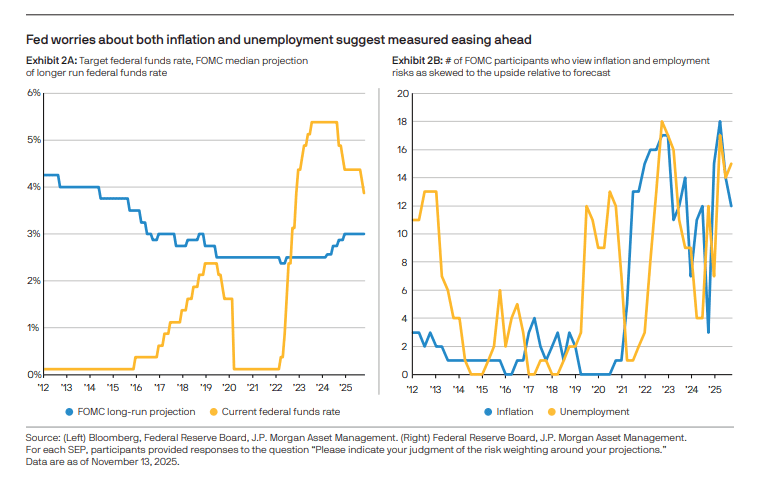 Source: J.P Morgan Assent Management
Is it still happening? Yes. According to the current 2026 economic data, the "K" has actually widened.
And, if you are looking at your Shopify dashboard and seeing mixed signals, your data is likely lying to you.
Why Aimerce is Your "Unfair Advantage"
In a crowded market, your profit margins are thin. You cannot afford to be part of the 40% Data Black Hole.
This is why a first party tracking tool like Aimerce is mandatory in a "Lipstick Effect" economy to capture those missing impressions.
1. Accuracy is your Margin Stabilizer - So, when CAC rises by 40% because everyone is chasing the same "lipstick" buyers, you can't waste half your budget on "ghost traffic" or bot clicks. Server side tracking on Shopify ensures Meta sees 100% of your conversions, not just the 60% the native pixel catches.
2. Feeding the Algorithm Better Signals - Meta’s algorithm targets more accurately when it has a high Event Match Quality (EMQ). By implementing server-side tracking, you pipe clean, first-party data directly to the Conversions API (CAPI). This gives the algorithm the "high-priority" signals it needs to find buyers who are still splurging.
3. Winning the "Match Rate" War - If your competitors rely on standard browser-based tracking, they are losing 40% of their customer signals while your robust server-side tagging on Shopify increases your customer match rates by 24% and improves your ROAS by 22%. In a tight economy, that 22% is the difference between scaling and going bust.
The Lipstick Effect brings the customers, but it also brings the noise.
If you are relying on Meta’s "standard" solutions to track these buyers, you are leaving money on the table for your competitors who have fixed their tracking.
A first-party tool isn't just a "nice to have" utility. It is the infrastructure that allows you to maintain a 3:1 LTV: CAC ratio while everyone else is bleeding margin.
Here to help you win, ✌️
Yiqi Wu
30-Day Aimerce Pixel Free Trial