How AI Agents (ChatGPT, Gemini, and Perplexity) Choose Which Products To Recommend
AI agents like ChatGPT, Gemini, and Perplexity are actively discovering and recommending products to shoppers. The brands showing up in those recommendations are not necessarily the biggest or most well-known, according to Yext Research, retrieval logic is the key for visibility not just content quality . They are the ones whose product catalogs are structured in a way AI agents can actually read and match to shopper queries. Aimerce's Catalog AI Enrichment feature optimizes your Shopify product titles, descriptions, tags, and structured metadata for the Universal Commerce Protocol, the open protocol that Shopify uses to surface your catalog to AI agents in real time.
AI traffic to US retailers rose 393% in Q1 2026 compared to a year earlier, according to Adobe Analytics, which tracks over one trillion visits to US retail sites. That alone would be worth paying attention to. But the more important finding is what that traffic is doing when it arrives. AI visitors converted 42% better than regular customers in March 2026. They spent 48% longer on site, browsed 13% more pages per visit, and drove 37% higher revenue per visit than non-AI traffic.
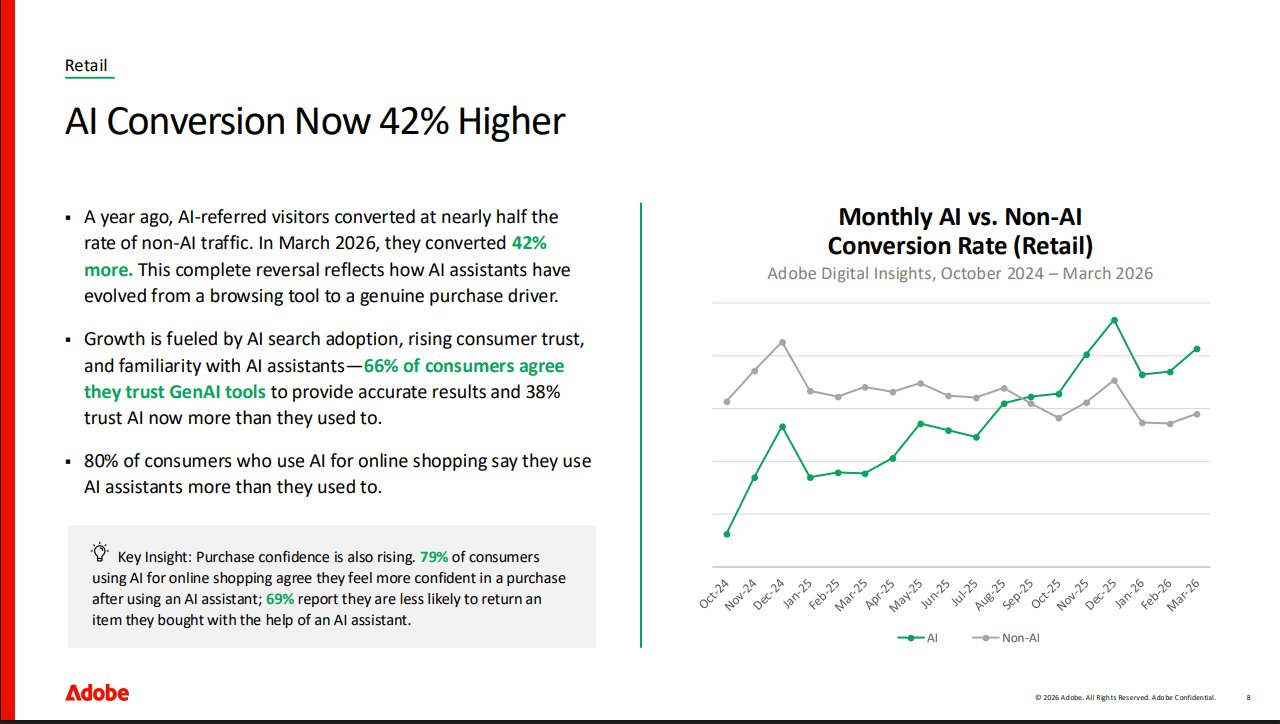 Image Credits: Adobe
Twelve months ago, regular human traffic was worth 128% more than AI traffic. That relationship has completely reversed in one year.
Why Is AI Traffic Growing So Fast for Retailers
According to Adobe's survey of over 5,000 US shoppers, 39% said they now use AI for online shopping and 85% said it improved their experience. The primary reason is that AI helps people narrow down products faster and find relevant discounts without manually browsing multiple sites.
Critically, 66% of those surveyed said they now believe AI tools provide accurate results when shopping. Trust in AI shopping recommendations has crossed a threshold that changes how people use these tools. They are not just using AI to research but they are using it to decide.
This creates a meaningful shift in how product discovery works. A shopper who previously would have searched Google, clicked through to a few product pages, and compared options manually is now asking an AI assistant what to buy. The AI queries structured product data, makes a recommendation, and in some cases facilitates the purchase directly without the customer ever visiting the brand's website.
For Shopify brands, the implication is really straightforward. If your product catalog is not structured in a way AI agents can read and match to shopping queries, you are not in the consideration set at all.
Why Your Products Only Show Up When People Search The Brand Name, But Not For Generic Queries
Here is the problem most Shopify brands do not realize they have.
If you are a brand people already know by name, you have roughly a 50/50 chance of being found by AI agents when someone searches for you specifically. If someone does not know your brand but is actively looking for what you sell, your chances of showing up drop to around 10 percent.
That gap exists because AI agents do not browse your website the way a human does. They pull structured data from feeds and APIs. If your product titles are short and brand-driven, like "Green Machine" instead of "Men's Wrinkle Resistant Slim Fit Blazer in Forest Green," agents cannot match your product to what someone is searching for. If your descriptions lack attributes like material, fit, use case, or care instructions, your product gets skipped entirely.
Adobe's data reinforces this. Around 34% of individual product pages cannot be properly accessed by AI. Roughly a quarter of homepage and category page content has not been optimized for LLMs. These are not small gaps. They represent a significant share of a brand's catalog being invisible to the fastest growing traffic source in retail right now.
What Is the Universal Commerce Protocol and Why Should Shopify Brands Care?
The Universal Commerce Protocol, or UCP, is an open protocol built by Google, Shopify, and other partners that lets merchants send their product catalog directly into AI surfaces like Google AI Mode, Gemini, and other agent-driven experiences.
When an AI agent is shopping on behalf of a user, it queries the UCP. Shopify surfaces your entire catalog through this protocol to every connected AI agent. This is not the same as website SEO or Answer Engine Optimization. Those approaches optimize for humans finding your content through search. UCP optimization is specifically about getting AI agents to find and recommend your products when they are making purchasing decisions on a shopper's behalf.
Think of it this way. Your website SEO is about getting humans to find you. Catalog AI Enrichment is about getting AI agents to find you. Both matter. They operate in completely different places.
What Happens to Your Business If AI Agents Cannot Find Your Products
Adobe's data points to a risk that goes beyond just missing traffic. Average order value is one of the biggest concerns in agentic commerce. When an AI agent buys one item on a customer's behalf, there is no upsell, no bundle suggestion, no email capture. Your AOV can drop significantly just because customers stopped visiting your product pages directly.
You cannot control all of that but you can control whether your products show up in the first place. A brand that is not in the UCP with a well-structured catalog is not even considered when an AI agent makes a recommendation. The brands that win in agentic commerce are going to be the ones that treated their catalog as a first-class asset, not an afterthought.
How to Get Your Shopify Products Recommended by ChatGPT, Gemini, and Perplexity
Aimerce spent time in beta with Shopify merchants and identified the same problems consistently: short brand names used as product titles, thin descriptions with no attributes, and tags that made sense internally but meant nothing to an AI query. Merchants with strong products simply were not showing up because their catalog data was not doing the work.
Catalog AI Enrichment addresses this in four steps.
Step 1: Install Aimerce from the Shopify App Store and access the Catalog AI SEO Enrichment feature inside the dashboard.
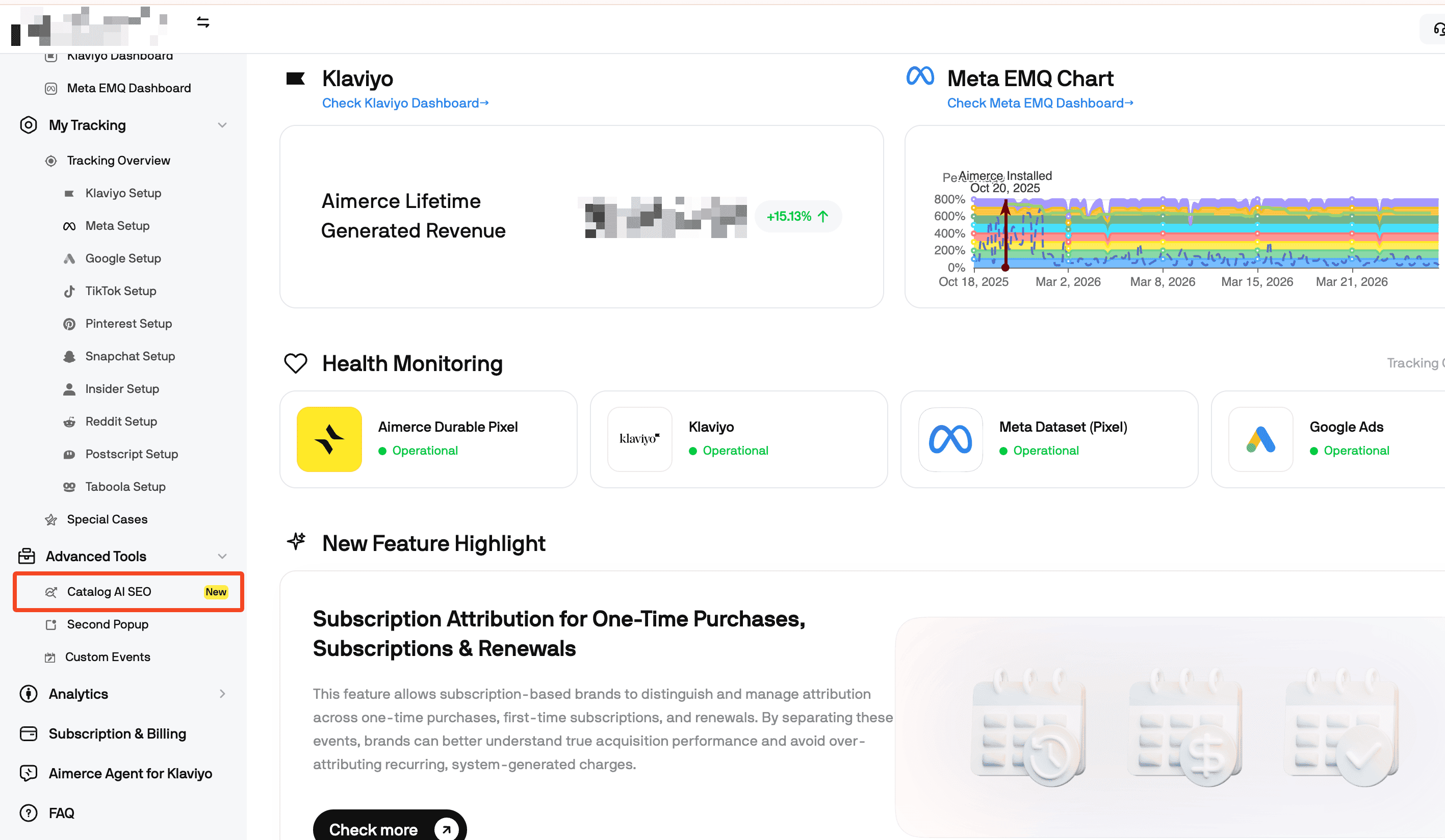
Step 2: Aimerce fetches your top products and audits them against UCP requirements and real AI agent query patterns.
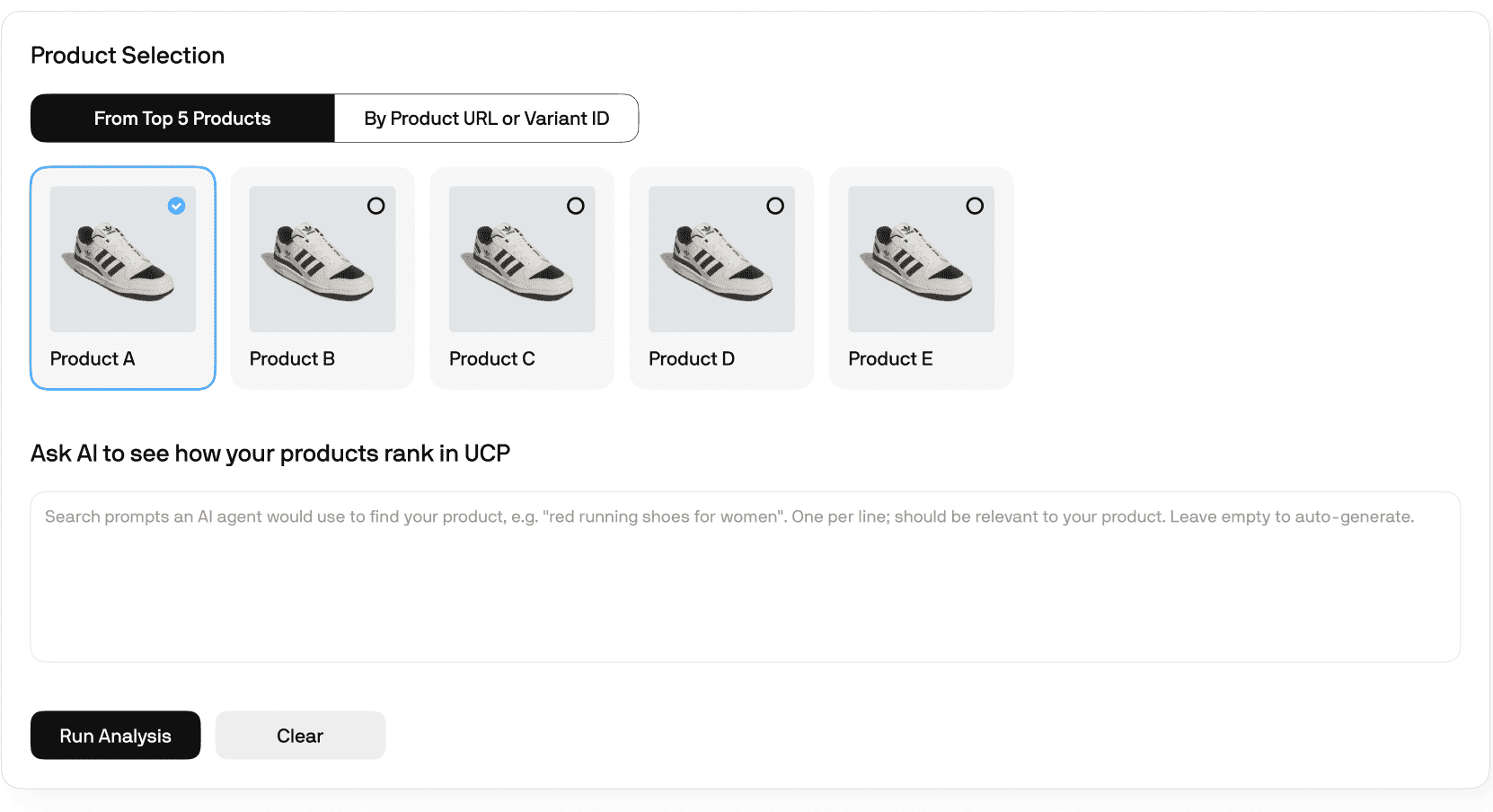
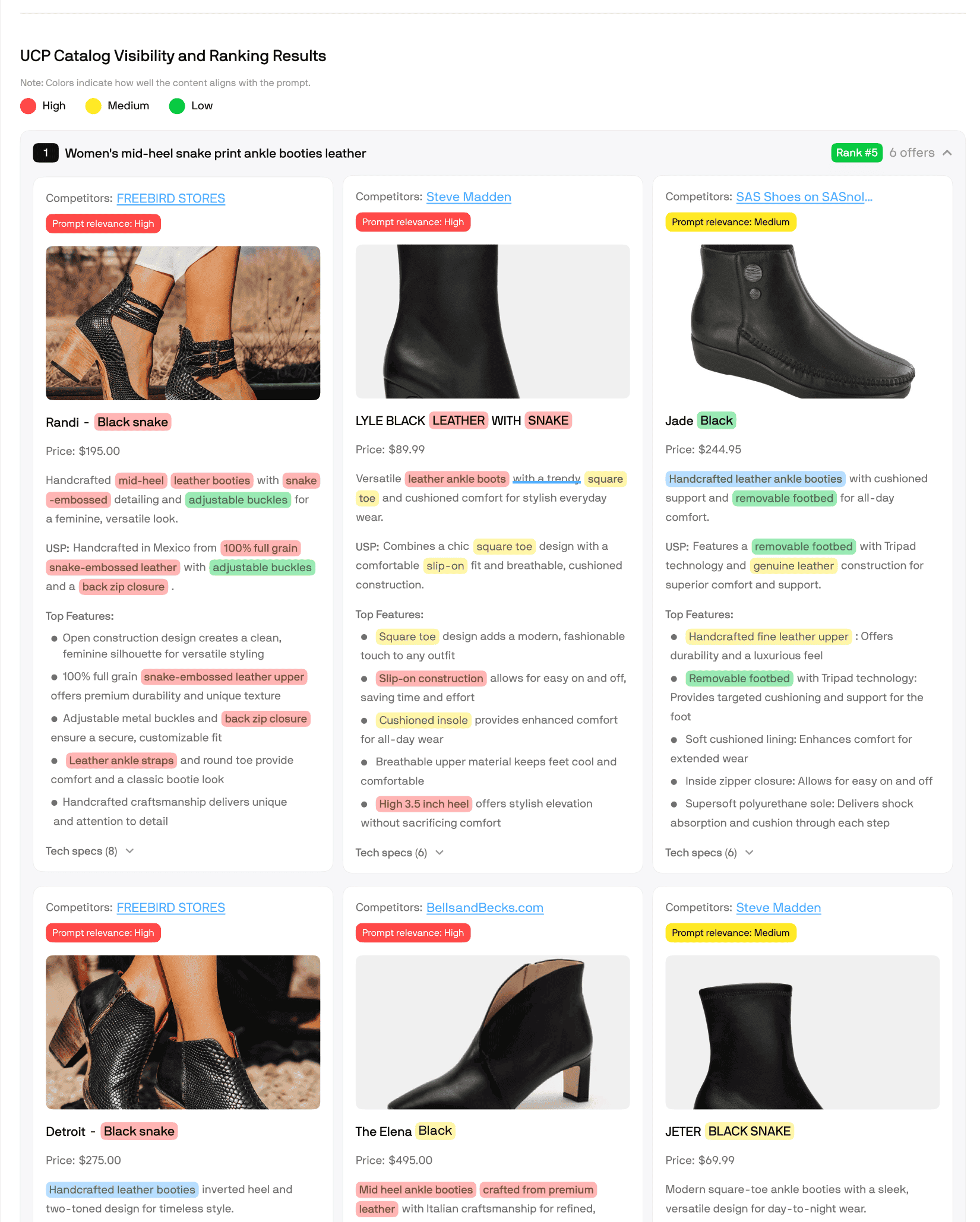
Step 3: We generate related prompts and test how your products rank against competitors inside UCP. You see exactly where you stand relative to what AI agents are currently surfacing for relevant queries.
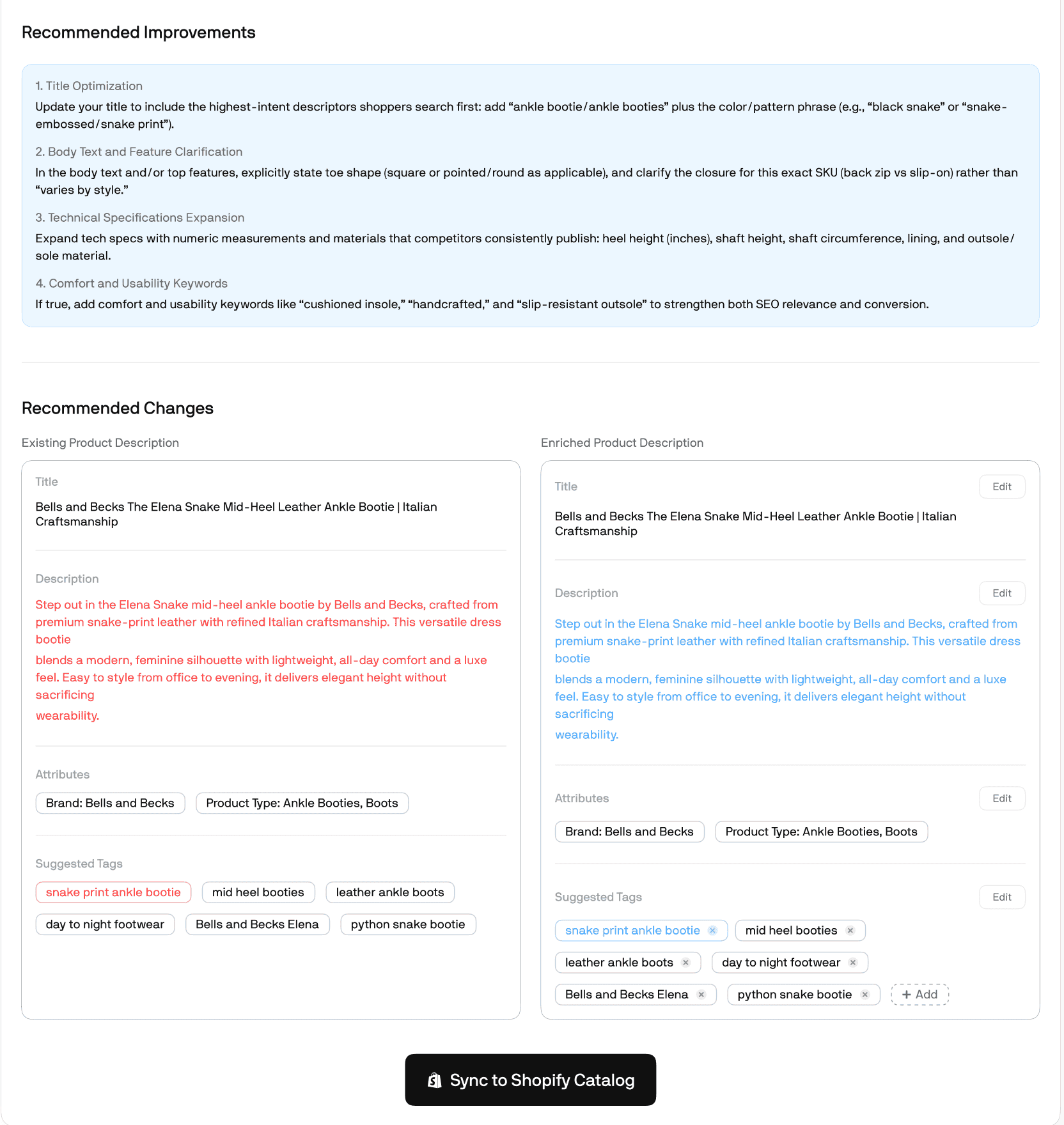
Step 4: We make specific recommendations to your product titles, descriptions, and tags. You review them, edit if you want, approve, and sync directly to Shopify. Nothing goes live without your sign off.
Two things worth noting for merchants who want control over their storefront presentation.
- You can keep your display name as a separate metafield for your frontend while using the Shopify product title for the descriptive, attribute-rich version that feeds into UCP.
- You can do the same with descriptions, one version optimized for human readers on your site and one version enriched for AI agents.
Aimerce now generates better formatted descriptions in HTML so you can copy and paste them directly into Shopify without any cleanup.
Note: This is a paid feature for Aimerce Server Side Tracking customers due to the cost of AI tokens involved in the enrichment process.
How Mod Bikes Is Already Winning With AI-Driven Orders
Mod Bikes, an electric bike brand with a longer-than-average customer consideration cycle, is already seeing this shift happen in their own Shopify dashboard. Orders sourced directly from ChatGPT are showing up regularly, something their team noticed firsthand before AI shopping was even a mainstream conversation.
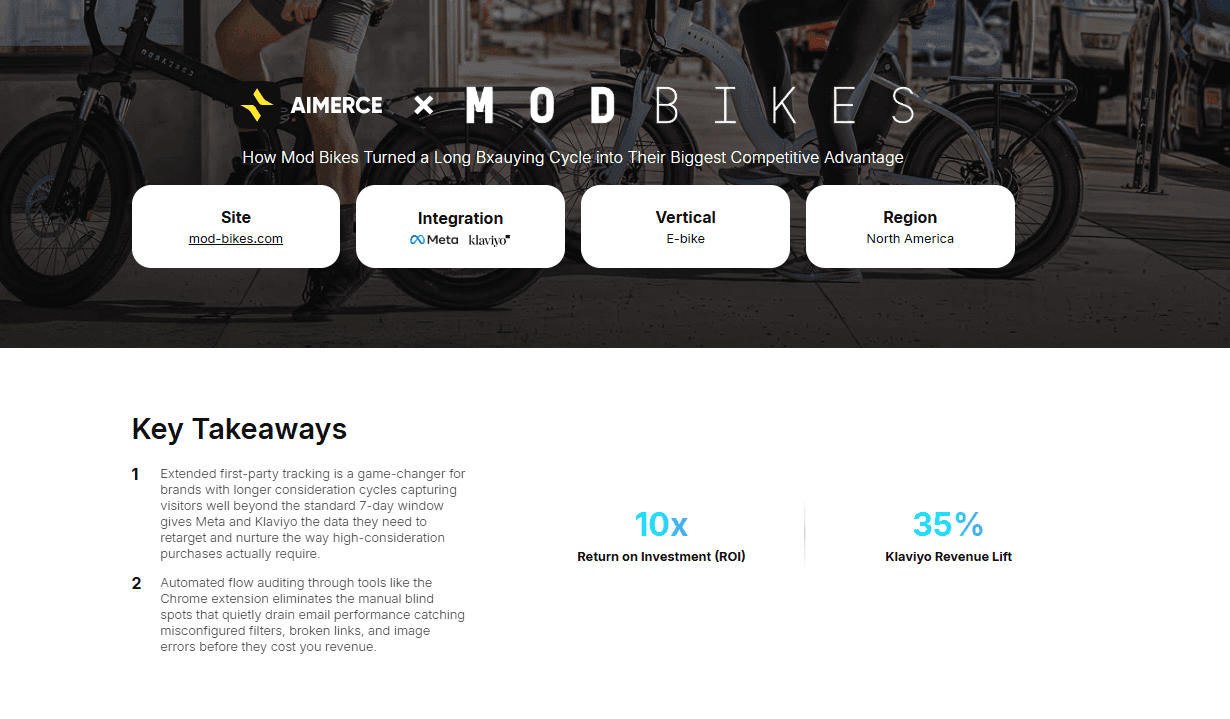
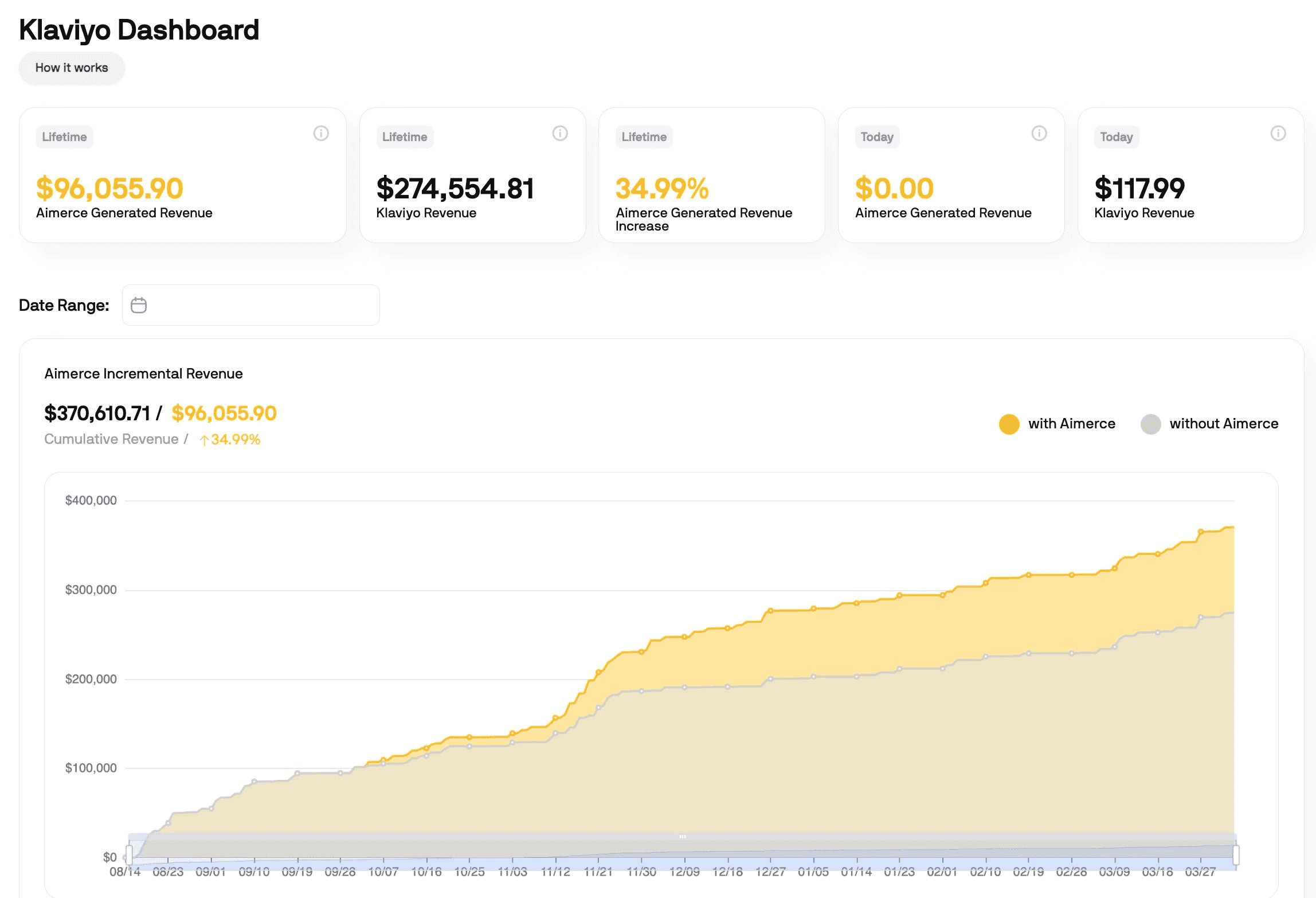
Using Aimerce's server-side tracking as their pixel infrastructure, Mod Bikes extended their first-party tracking window from the standard 7 days to a full year, giving Meta and Klaviyo the data needed to nurture prospects through a buying cycle that can stretch weeks or months and happily shared their success story with Aimerce. With Aimerce, Mod Bikes generated $96,055.90 in incremental revenue, a 34.99% revenue increase, and a 10x ROI, while lifting their total Klaviyo revenue to $274,554.81, a 35% improvement in email-driven sales.
Now, with AI-driven orders already coming in organically through ChatGPT, Mod Bikes is moving into Aimerce's Catalog AI Enrichment feature to make sure their product catalog is properly structured for the Universal Commerce Protocol, positioning themselves to capture even more of the AI shopping trend they are already benefiting from.
Their story is a good example of what happens when the tracking foundation is solid. You do not just recover lost conversions, you open the door to entirely new revenue streams before your competitors notice them.
FAQ
How AI Traffic is growing and why is it growing for retailers? AI traffic refers to visitors who arrive at a retail site after being referred by an AI assistant like ChatGPT, Gemini, or Perplexity. According to Adobe Analytics, AI traffic to US retailers rose 393% in Q1 2026 compared to a year earlier. It is growing because more consumers are using AI tools to research and make purchasing decisions, with 39% of shoppers surveyed by Adobe saying they now use AI for online shopping.
Why does AI traffic convert better than regular traffic? Adobe's data shows AI traffic converted 42% better than regular visitors in March 2026, a complete reversal from March 2025 when AI traffic converted 38% worse. The likely reason is that AI agents pre-qualify shoppers by matching them to products that fit their specific needs before they ever arrive on the site. A visitor referred by an AI assistant already knows what they are looking for.
What is the Universal Commerce Protocol? The Universal Commerce Protocol is an open protocol built by Google, Shopify, and other partners that allows merchants to send their product catalog directly into AI surfaces like Google AI Mode and Gemini. When an AI agent is shopping on behalf of a user, it queries the UCP to find relevant products. Shopify surfaces your entire catalog through this protocol automatically, but only well-structured catalogs get matched to relevant queries.
Why are product titles and descriptions so important for AI discovery? AI agents pull structured data from feeds and APIs rather than browsing websites the way humans do. If your product title is a short brand name without descriptive attributes, the agent cannot match it to a shopper's query. If your description lacks material, fit, use case, or other relevant attributes, your product gets skipped. According to Adobe, around 34% of individual product pages currently cannot be properly accessed by AI.
What is Catalog AI Enrichment and how is it different from SEO? Catalog AI Enrichment is a feature inside Aimerce that optimizes your Shopify product titles, descriptions, tags, and structured metadata specifically for the UCP and AI agent discovery. It is different from SEO, which optimizes your website content for human searchers on Google. Catalog AI Enrichment optimizes your product data for AI agents making purchasing recommendations on behalf of shoppers. Both matter but they operate in completely different places.
Does Catalog AI Enrichment change how my products look on my Shopify storefront? Not unless you want it to. Aimerce uses a metafield approach that lets you keep your display names and consumer-facing descriptions exactly as they are on your storefront, while using enriched, attribute-rich versions specifically for UCP and AI agent discovery. Nothing goes live without your review and approval.
How much does Catalog AI Enrichment cost? It is a paid feature inside Aimerce due to the AI token costs involved in the enrichment and testing process. You can get started by installing Aimerce from the Shopify App Store and accessing the feature inside the dashboard to see where your top products currently stand in UCP.
What happens if my catalog is not optimized for AI agents? Your products simply do not show up when AI agents are making recommendations to shoppers actively looking for what you sell. According to Adobe, brands that are not AI-accessible are already missing out on traffic that converts 42% better and drives 37% higher revenue per visit than standard traffic. As AI shopping continues to grow, an unoptimized catalog means an increasingly large share of high-intent shoppers never see your products.

Try Aimerce Pixel Risk-Free
for 30 Days
Most teams see results within 2 weeks.
Money-back guarantee.
It pays for itself, or you don't pay anything.
30-Day Aimerce Pixel Free Trial