

Cross-device tracking is the ability to connect customer interactions across smartphones, tablets, and desktops into a unified customer journey, and the best tools for Shopify marketers in 2026 are Aimerce, Segment, Triple Whale, Mixpanel, and Tealium AudienceStream. Most DTC brands lose 20% to 40% of attribution accuracy because a customer browses on mobile, adds to cart on a tablet, and purchases on desktop, and each touchpoint appears as a separate anonymous visitor without cross-device identity resolution.
Why Cross-Device Tracking Matters for DTC Brands and Ecommerce Marketers
The average customer uses 3.2 devices before completing a purchase. Without cross-device tracking, each session on a different device appears as a new visitor in your analytics. The result is fragmented attribution data that systematically undercounts the value of upper-funnel touchpoints and makes customer acquisition costs look higher than they actually are.
Four core challenges make cross-device tracking difficult without the right infrastructure:
| Challenge | What It Means in Practice |
|---|---|
| Identity resolution | The same customer on mobile and desktop appears as two different people |
| Data fragmentation | Behavioral signals scatter across sessions with no connecting thread |
| Privacy compliance | Consent must be maintained consistently across all device touchpoints |
| Attribution accuracy | Conversion credit goes to the last device rather than the full journey |
Cookie-based tracking handles none of these well. Safari ITP deletes cookies after 7 days. iOS App Tracking Transparency blocks cross-app tracking. Third-party cookies are deprecated. The only durable solution is first-party identity resolution built on signals customers provide directly, primarily email captured at checkout or account login.
How Server-Side Tracking Enables Cross-Device Attribution
Browser pixels track sessions, not people. Server-side tracking tracks people.
When a customer provides their email at checkout, that hashed identifier can be matched across devices and sessions, connecting a mobile browse session from three weeks ago to a desktop purchase today. This is deterministic identity resolution, meaning it is based on a real confirmed identifier rather than probabilistic inference from device fingerprinting or IP matching.
Server-side cross-device tracking works through three mechanisms:
1. First-party identifier matching Email or phone captured at any point in the customer journey (checkout, account creation, newsletter signup) becomes a durable cross-device identifier that persists regardless of cookie lifespan.
2. Conversion API enrichment Hashed customer identifiers sent to Meta via Conversions API and Google via Enhanced Conversions allow both platforms to match conversions to ad clicks that happened on different devices, recovering attribution that last-click models miss entirely.
3. Extended attribution windows Standard browser cookies last 7 days on Safari. Server-side first-party identifiers persist for up to 1 year with the right implementation, capturing purchases from customers with long consideration cycles across multiple device sessions.
Best Cross-Device Tracking Tools for Marketers
1. Aimerce: Best Server-side tracking Shopify for Cross-Device Tracking and Attribution Reporting
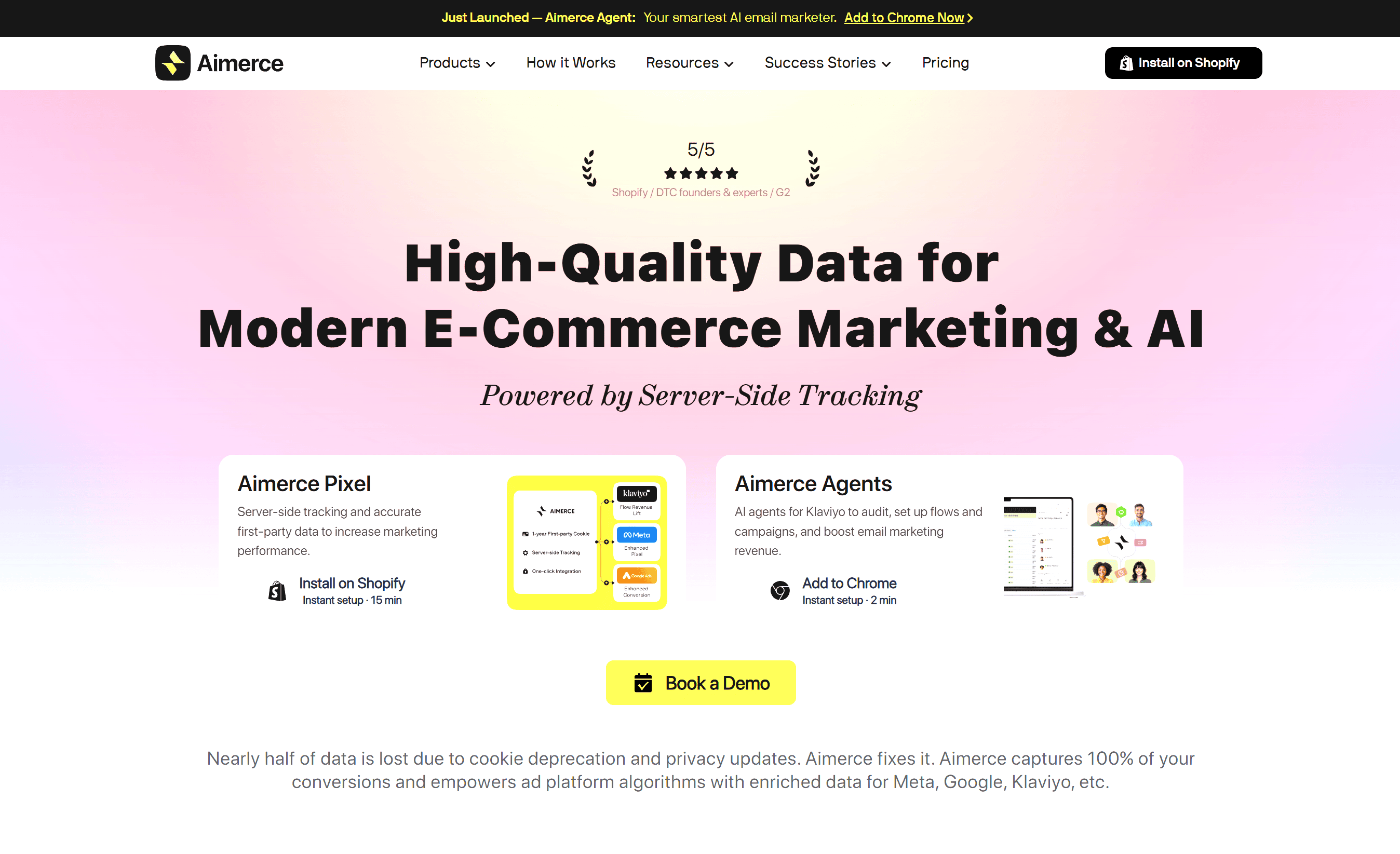
Aimerce is the best cross-device tracking tool for ecommerce brands running on Shopify. It is purpose-built for Shopify, using a webhooks plus web pixel hybrid that captures ecommerce events at the server level and resolves cross-device identity using first-party data collected at checkout.
Cross-device capabilities:
- Durable ID technology maintains cross-device identity for up to 1 year, connecting ad clicks and browse sessions to purchases that happen weeks later on different devices
- Hashed email and phone matching sends first-party identifiers to Meta via Conversions API and Google via Enhanced Conversions, improving cross-device attribution accuracy across both platforms
- Server-side first-party data collection captures identity signals at the backend regardless of browser restrictions, Safari ITP, or iOS privacy limitations
- Bot filtering removes non-human traffic before it contaminates cross-device profiles and attribution data
- Automatic deduplication via order_id prevents the same cross-device journey from being counted as multiple conversions
Best for: Ecommerce brands and DTC marketers running Meta, Google Ads, Klaviyo and Taboola who lose attribution when customers research on one device and purchase on another.
Shopify compatibility: Native Shopify App Store install. No code required.
Pricing: $299/mo up to 1,000 orders. $499/mo Growth. Enterprise for 50,000+ orders.
2. Segment (Twilio): Multi-Tool Cross-Device Data Unification
Segment is a Customer Data Platform that acts as a central hub, collecting user behavior from every device and routing unified customer profiles to hundreds of downstream tools including Meta, Google, Klaviyo, and analytics platforms.
 Cross-device capabilities:
- Unified customer profiles consolidate events from all devices into a single identity record using deterministic and probabilistic matching
- Server-side event ingestion reduces reliance on browser cookies for session continuity across mobile, tablet, and desktop
- Identity resolution connects anonymous sessions to known users the moment email or account login is captured anywhere in the journey
- Single event taxonomy flows consistently to all downstream tools, eliminating mismatched attribution across platforms
- Reverse ETL syncs warehouse-level customer segments back to ad platforms for cross-device audience activation
Where it fits in a Shopify stack: Segment works best for brands that have outgrown single-platform attribution and need one source of truth for customer journeys across many tools simultaneously. If you are sending the same customer data to Meta, Google, Klaviyo, your analytics platform, and your data warehouse, Segment reduces the number of individual integrations you maintain and ensures every tool sees the same identity-resolved customer profile.
What to watch for: Segment does not have a native Shopify app. Setup requires engineering resources and ongoing event governance. For brands that only need better Meta and Google attribution, Aimerce delivers the same cross-device identity resolution with a fraction of the implementation overhead.
Best for: Scaling brands with multiple data tools that need cross-device data unified into one governed identity layer across their entire marketing stack.
Pricing: Custom, based on monthly tracked users.
3. Triple Whale: Shopify Cross-Device Attribution Reporting
Triple Whale is a Shopify-native attribution platform that combines first-party pixel tracking with multi-touch attribution dashboards, giving brands a cross-channel and cross-device view of what is actually driving conversions.
 Cross-device capabilities:
- First-party pixel captures behavioral data across devices for cross-device journey mapping independent of third-party cookies
- Multi-touch attribution modeling connects upper-funnel device touchpoints to final conversions rather than crediting only the last device
- Customer journey visualization shows the full path from first touch to purchase across devices in a single dashboard view
- Real-time profit tracking factors in COGS and ad spend for true cross-device ROAS visibility across Meta, Google, and other channels
- Identity graph connects anonymous sessions to known customers over time as more identifying information is collected
Where it fits in a Shopify stack: Triple Whale sits above your tracking infrastructure as a reporting and decision layer. It reads from your existing Shopify data and ad platform connections and applies its own attribution modeling on top. This makes it a strong complement to server-side tracking rather than a replacement. Pair it with Aimerce for clean conversion signals feeding Meta and Google, then use Triple Whale for the cross-channel reporting view.
What to watch for: Triple Whale's attribution methodology is proprietary. The numbers you see in its dashboard will differ from Meta Ads Manager and Google Ads, and understanding why requires familiarity with its specific model. It is a reporting and analysis tool, not an ad signal optimization tool.
Best for: Ecommerce brands that want cross-device attribution combined with profit intelligence and paid media reporting in one dashboard.
Shopify compatibility: Native Shopify App Store install.
Pricing: From $300/mo based on annual revenue.
4. Mixpanel: Cross-Device Product Analytics
Mixpanel is an event analytics platform that tracks user actions across devices with powerful segmentation, funnel analysis, and cohort reporting, configurable to use first-party identifiers for cross-device session continuity.
 Cross-device capabilities:
- Server-side event ingestion reduces cookie dependency for cross-device session tracking across mobile and desktop
- Identity resolution links anonymous sessions to known users when email is captured, connecting pre-login mobile behavior to post-login desktop actions
- Flexible user identification connects sessions under one profile using any consistent identifier you choose
- Funnel analysis shows exactly where cross-device journeys break down between first touch and conversion, with drill-down by device type
- Cohort analysis compares retention and behavior for customers who converted on mobile versus desktop versus cross-device journeys
Where it fits in a Shopify stack: Mixpanel answers the "what is happening on my site across devices" question. It does not answer the "which ad drove this purchase" question. Use it alongside server-side tracking for on-site funnel optimization and Mixpanel for behavioral analytics, but do not rely on it as your primary attribution tool for paid media decisions.
What to watch for: Mixpanel does not send conversion signals to Meta or Google. It is purely an analytics and product intelligence tool. For paid media attribution, you still need server-side tracking and Conversions API connections regardless of whether you use Mixpanel.
Best for: CRO and product teams that need cross-device behavioral analytics for on-site funnel optimization and merchandising decisions.
Shopify compatibility: No native app. Connects via JavaScript snippet or server-side SDK.
Pricing: Free tier available. Paid plans from $28/mo.
5. Tealium AudienceStream: Enterprise Cross-Device Profile Management
Tealium combines tag management with a real-time Customer Data Platform, stitching visitor profiles across devices as users move through their journey and activating those unified profiles across marketing destinations.
 Cross-device capabilities:
- Real-time visitor stitching creates unified profiles as users move between devices, updating immediately rather than batch-processing overnight
- Rule-based identity resolution connects sessions using deterministic matching (confirmed identifiers) and probabilistic matching (inferred signals) in sequence
- Integrates with hundreds of marketing and analytics tools for consistent cross-device profile activation across every destination simultaneously
- Consent management features ensure cross-device tracking respects user privacy preferences at the profile level, not just at the tag level
- Audience segmentation based on cross-device behavior enables activation of specific customer segments across Meta, Google, and email platforms
Where it fits in a Shopify stack: Tealium is enterprise infrastructure. It is the right choice for brands managing tracking across multiple storefronts, markets, or brands under one umbrella that need centralized governance over how cross-device profiles are built and activated. For a single Shopify store, the cost and complexity significantly outweigh the benefit.
What to watch for: Implementation requires dedicated technical resources and ongoing management. Tealium is not a plug-and-play solution. Budget for weeks of implementation time and ongoing platform ownership.
Best for: Enterprise brands and agencies managing complex cross-device tracking across multiple properties, markets, or brands that need advanced governance and multi-vendor activation.
Shopify compatibility: No native app. Custom implementation via API and tag deployment. Requires dedicated technical resources.
Pricing: Custom enterprise pricing.
6. Ruler Analytics: B2B and High-Consideration Cross-Device Journeys
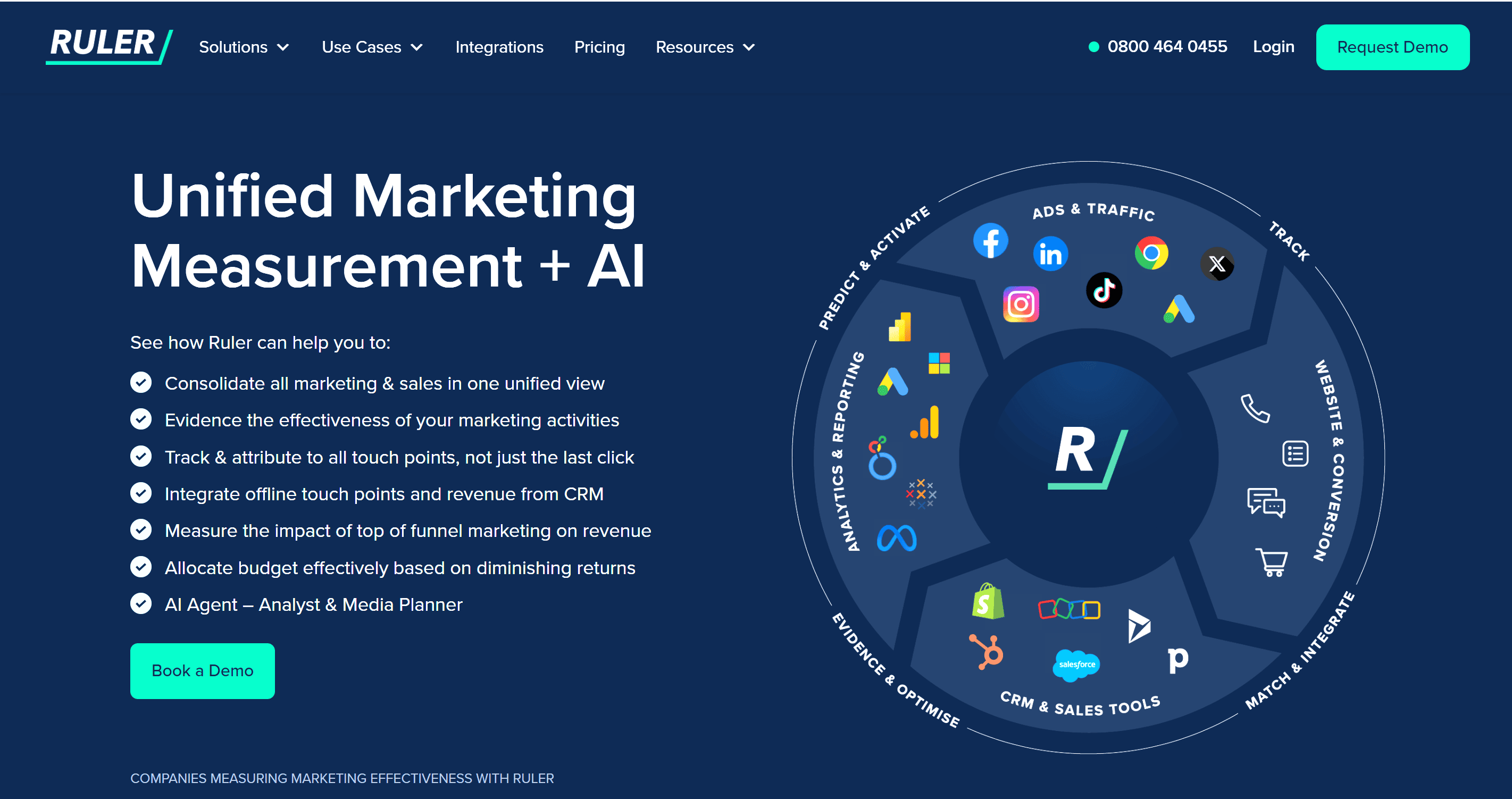
Ruler Analytics specializes in connecting digital cross-device journeys to offline conversions such as phone calls, form submissions, and in-person sales. It is built for businesses where the purchase decision spans a long consideration cycle across multiple sessions, devices, and touchpoints before a conversion happens offline.
Cross-device capabilities:
- Tracks the full cross-device journey from first ad click through to offline conversion events like phone calls and form fills
- Visitor-level tracking connects anonymous multi-device sessions to identified leads when contact information is captured
- Multi-touch attribution modeling credits every touchpoint in the cross-device journey, not just the last click
- CRM integration matches offline revenue back to the original digital touchpoints that started the journey
- Revenue attribution reporting shows which campaigns, channels, and devices actually drive closed revenue rather than just leads
Best for: B2B brands, high-ticket ecommerce, and businesses with long consideration cycles where customers research across multiple sessions and devices before converting offline or via phone.
Shopify compatibility: No native app. Connects via JavaScript tracking snippet on your storefront.
Pricing: Custom.
7. Cometly: AI-Powered Cross-Device Ad Attribution
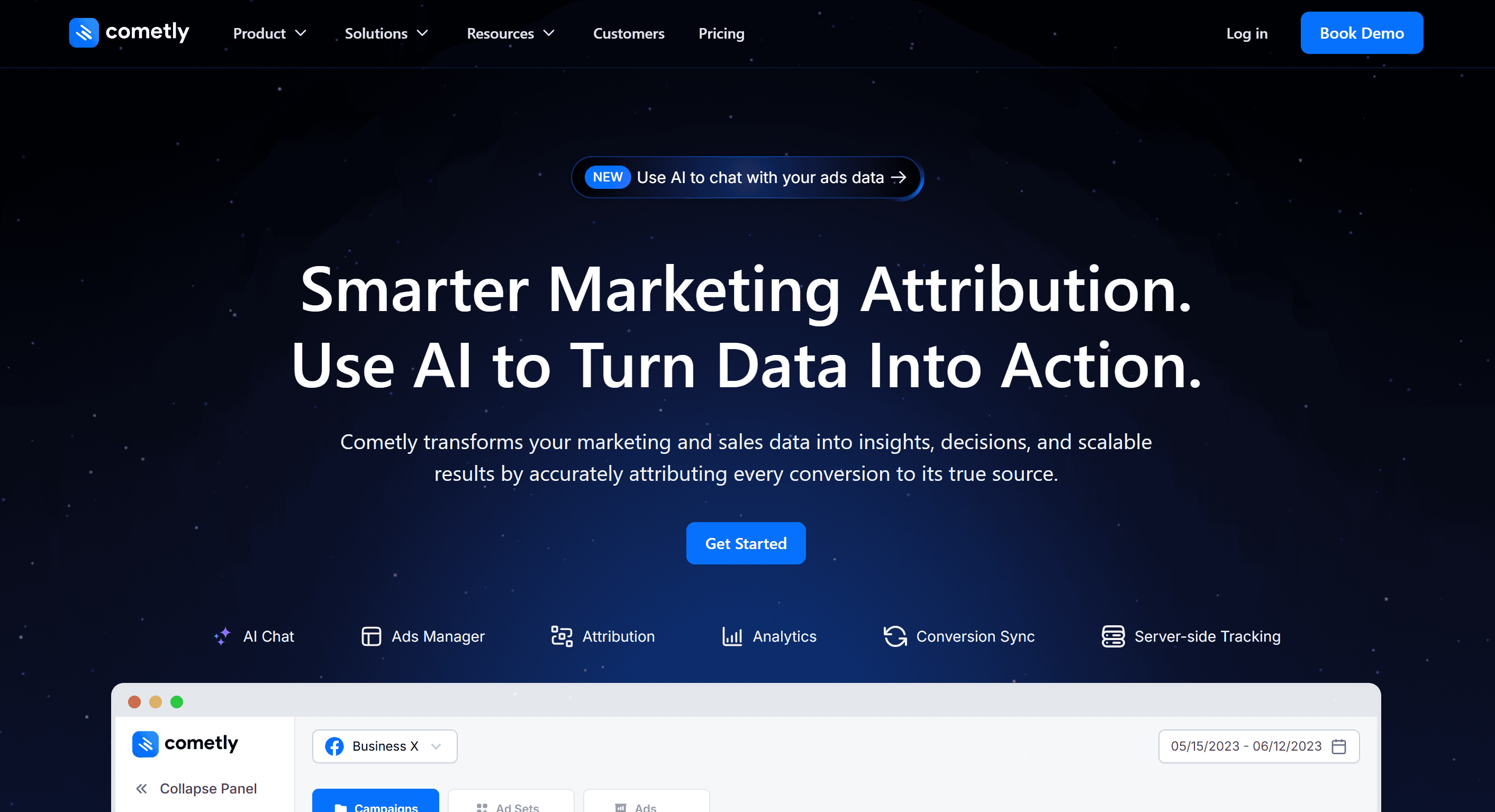
Cometly is a server-side tracking and attribution platform that bypasses browser restrictions including iOS 14+ privacy limitations to provide accurate multi-touch attribution across mobile and desktop. It combines cross-device tracking with AI-powered recommendations designed to help brands identify and scale their highest-performing ads.
 Cross-device capabilities:
- Server-side tracking bypasses ad blockers and iOS privacy restrictions that prevent browser pixels from capturing cross-device sessions
- Multi-touch attribution connects ad clicks across devices to final conversions, recovering attribution that last-click models miss
- AI-powered ad recommendations analyze cross-device attribution data to surface which campaigns and creatives should be scaled
- First-party data collection reduces reliance on third-party cookies for cross-device identity resolution
- Real-time attribution dashboard shows cross-device customer journeys and campaign performance in one view
Best for: Performance marketers running paid social and paid search campaigns who need cross-device attribution combined with AI-powered creative and campaign optimization recommendations.
Shopify compatibility: No native app. Connects via pixel snippet and Shopify API integration. Requires setup.
Pricing: Custom.
| Tool | Shopify Native | Cross-Device Method | Server-Side | Bot Filtering | Best For | Starting Price |
|---|---|---|---|---|---|---|
| Aimerce | Yes | Durable ID, hashed email | Yes | Yes | Shopify DTC attribution | $299/mo |
| Segment | Partial | Unified CDP profiles | Yes | Varies | Multi-tool data unification | Custom |
| Triple Whale | Yes | First-party pixel + attribution | Partial | Partial | Attribution reporting | $300/mo |
| Mixpanel | No | Event-based identity | Yes | No | Product analytics | $28/mo |
| Tealium | No | Real-time visitor stitching | Yes | Varies | Enterprise profile management | Custom |
What Good Cross-Device Attribution Looks Like
Most brands evaluate cross-device tracking by whether their numbers look better in a dashboard. The more useful test is whether the data is driving better decisions.
Signs your cross-device tracking is working correctly:
- A customer who browses on mobile and purchases on desktop is counted as one conversion, not two visitors
- Meta and Google attribute conversions to campaigns that ran days or weeks before the purchase date
- Klaviyo abandoned cart flows trigger for customers who added to cart on one device and did not purchase on another
- Your customer lifetime value calculations reflect the full journey, not just the last-device session
- Attribution windows in Meta and Google match the typical consideration cycle for your products
Frequently Asked Questions
What are the best cross-device tracking tools for marketers in 2026? The best cross-device tracking tools for marketers in 2026 are Aimerce for Shopify ecommerce and DTC attribution, Segment for multi-tool data unification, Triple Whale for attribution reporting dashboards, Mixpanel for product analytics, Tealium for enterprise profile management, Ruler Analytics for B2B and offline attribution, and Cometly for AI-powered ad attribution. For ecommerce brands on Shopify, Aimerce is the only native App Store install that covers server-side tracking, Conversions API, and first-party identity resolution in one platform.
How does cross-device tracking work with server-side tracking? Server-side tracking captures first-party identifiers like hashed customer email at the backend when customers provide them during checkout or account login. These identifiers are then used to match sessions across devices, connect ad clicks to delayed purchases, and send enriched conversion signals to Meta via Conversions API and Google via Enhanced Conversions. Unlike browser cookies that expire or get blocked, server-side first-party identifiers persist and work across devices.
Why does cross-device tracking matter for Meta and Google attribution? Most conversion attribution models credit the last device used before purchase. When a customer clicks your Meta ad on mobile and purchases on desktop four days later, last-click attribution misses the mobile ad entirely. Server-side cross-device tracking with hashed email matching allows Meta and Google to connect that purchase back to the original mobile ad click, giving campaigns proper credit and improving algorithm optimization signals.
What is identity resolution in cross-device tracking? Identity resolution is the process of connecting multiple device sessions and touchpoints to a single customer profile. Deterministic identity resolution uses a confirmed identifier like hashed email or phone number that the customer provided. Probabilistic resolution uses inferred signals like device fingerprinting or IP address matching. Deterministic is more accurate and privacy-compliant. Aimerce uses deterministic identity resolution based on first-party identifiers collected at Shopify checkout.
How does Safari ITP affect cross-device tracking? Safari ITP limits browser cookies to 7 days, which breaks attribution for customers who research on Safari and purchase more than a week later. Server-side first-party tracking bypasses this limitation because identity is maintained through hashed email and phone identifiers stored at the server level, not browser cookies. Aimerce's Durable ID technology specifically addresses Safari ITP by extending attribution windows to 1 year.
Do I need a CDP for cross-device tracking on Shopify? Not necessarily. Most Shopify DTC brands recover significant cross-device attribution accuracy through server-side tracking and Conversions API connections without a full CDP. Aimerce covers cross-device identity resolution, Meta and Google attribution, and first-party data collection in a single platform. A CDP like Segment becomes valuable when you need cross-device data unified across many tools beyond just ad platforms and email.
Why Server-Side Tracking is Non-Negotiable
Cross-device tracking is not a reporting problem. It is an attribution accuracy problem that directly affects how Meta and Google optimize your campaigns, what your customer lifetime value calculations reflect, and whether your Klaviyo flows trigger at the right moments.
The foundation is first-party identity resolution built on signals customers provide at checkout, not browser cookies that expire or get blocked. Server-side tracking is the architecture that makes that foundation reliable.
For ecommerce brands evaluating their current setup, this is the right moment to ask whether your tracking is anchored to browser events or to the order itself. Platforms like Aimerce are built on the latter, using server-side first-party data infrastructure to capture purchases and resolve cross-device identity at the backend regardless of what the browser does.
Build cross-device tracking on first-party data. Everything downstream gets more accurate.

Try Aimerce Pixel Risk-Free
for 30 Days
Most teams see results within 2 weeks.
Money-back guarantee.
It pays for itself, or you don't pay anything.
30-Day Aimerce Pixel Free Trial