Selling a $3,000+ product online is hard. Getting someone to buy one without seeing it in person? Even harder. That's the reality for Bluejay eBikes, a North American e-bike brand built around stylish, high-performance electric bikes.
The numbers don't lie. This company was dealing with long buying cycles, attracting high-intent visitors, but had a retargeting problem that was quietly killing their conversions. So, how did they fix it? With Aimerce. Here's their story, and a few lessons for DTC startups with high-AOV products.
Expensive Products Take Time to Sell
Bluejay's average order value sits above $3,000. That means most customers don't buy on their first visit. The typical buying cycle stretches 30 or more days from first click to purchase. Shoppers browse, compare, think it over, and come back.
That extended journey requires consistent, well-timed retargeting. Without it, you're invisible by the time the customer is ready to buy.
But Bluejay had a bigger problem sitting underneath all of that.
Safari's 7-Day Cookie Limit
Safari, which powers the majority of mobile browsing in North America, applies a 7-day limit on tracking cookies. For a brand with a 30+ day buying cycle, that's a serious gap.
Over half of Bluejay's mobile visitors were disappearing from their retargeting audiences before ever converting. No ecommerce conversion tracking. No abandoned cart follow-up. No Meta Ads signals to work with.
This is a well-known pain point for iOS tracking on Shopify. Standard pixel-based setups don't survive Safari's Intelligent Tracking Prevention (ITP). And without fixing that, no amount of ad spend will close the gap.
Aimerce Durable ID
Bluejay partnered with Aimerce, a Shopify-native attribution tracking platform built for exactly this problem.
Using Aimerce's Durable ID technology, Bluejay extended user tracking from 7 days to a full year. Instead of losing a visitor after one week, Aimerce maintained a persistent, privacy-compliant identifier tied to that user, keeping them reachable across the entire buying journey.
This is the core of what server side tracking Shopify setups solve. Rather than relying solely on browser-based pixels that get blocked or expired, Aimerce uses server-side tagging Shopify merchants can implement without a complex tech stack. Think of it as a more reliable alternative to client-side pixels, similar in goal to Meta Conversion API Shopify integrations, but built specifically for Shopify stores and Klaviyo conversion tracking workflows.
What Changed in 8 Weeks
The results came fast.
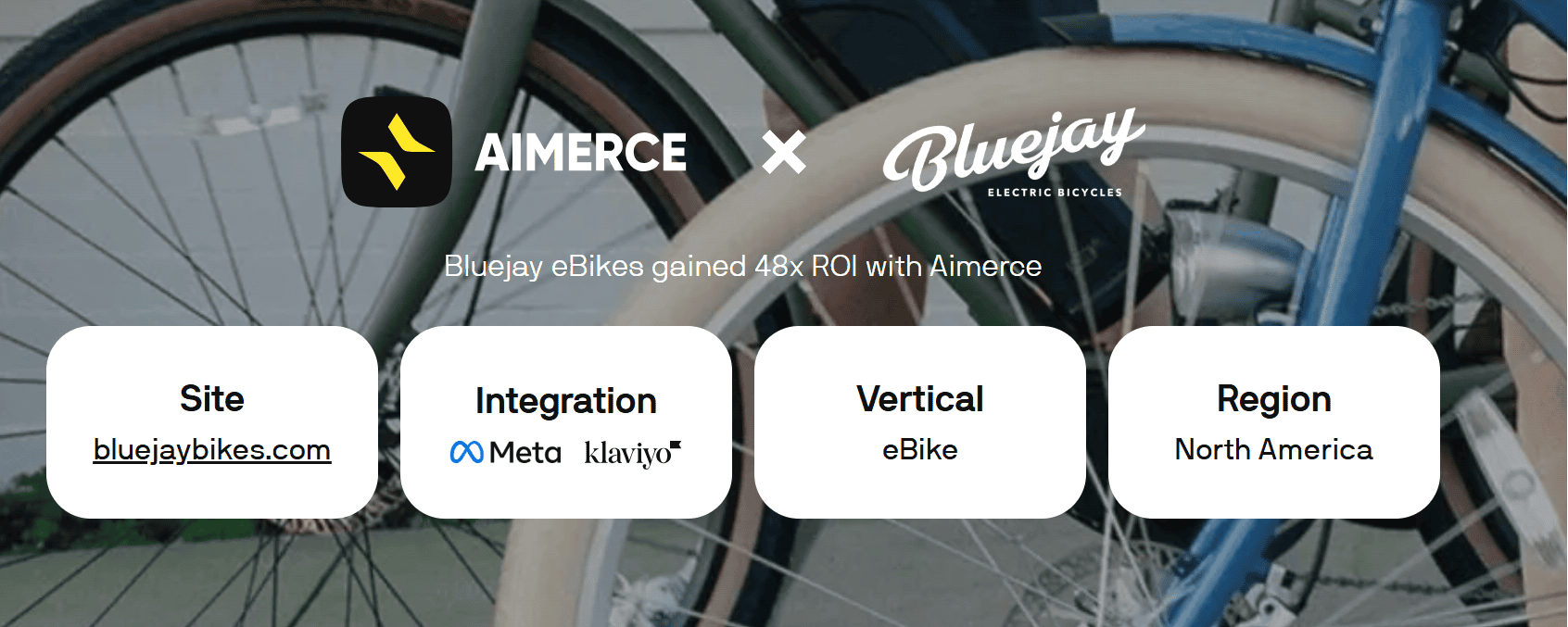
Within two weeks of implementing Aimerce, Bluejay saw a 27% improvement in Meta Ads Event Match Quality (EMQ) for their Initiate Checkout event. Better EMQ means Meta's algorithm gets cleaner, more accurate signals, which directly improves how your ads are targeted and optimized.
Over the following eight weeks:
- 31% increase in Abandoned Cart Audience Sizes
- 20% revenue lift from Klaviyo flows alone
- 48x ROI on their Aimerce investment within two months
Here's a quick breakdown of what changed before and after:
| Metric | Before Aimerce | After Aimerce |
|---|---|---|
| Retargeting window | 7 days (Safari limit) | Up to 1 year |
| Meta EMQ (Initiate Checkout) | Baseline | +27% improvement |
| Abandoned Cart Audience Size | Baseline | +31% increase |
| Klaviyo Revenue | Baseline | +20% lift |
| ROI | -- | 48x |
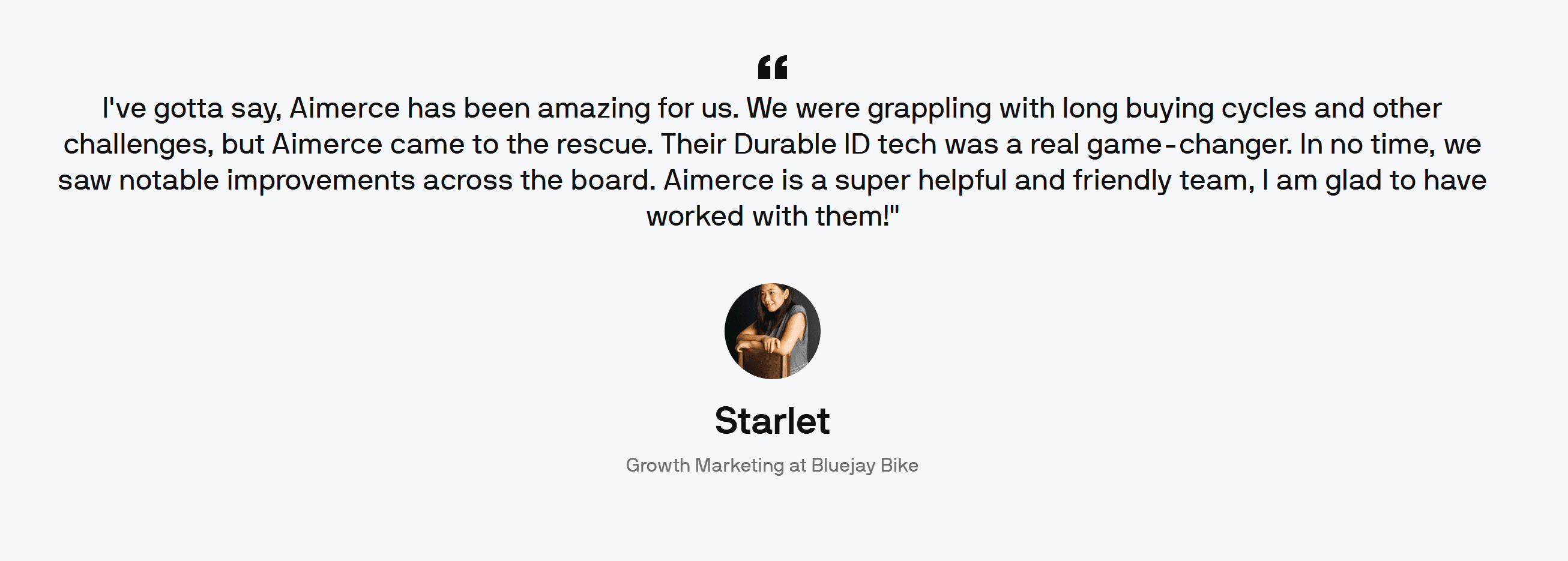
Starlet, Growth Marketing at Bluejay Bike, put it plainly:
Key Takeaways for High-Ticket Ecommerce Brands
If you're running a high-AOV Shopify store with buying cycles longer than 7 days, your current pixel setup is almost certainly leaking revenue. Here's what Bluejay's story makes clear:
- Browser-based pixels alone aren't enough. Safari ITP and iOS privacy changes have made client-side tracking unreliable for DTC brands with longer sales cycles.
- Server side tracking Shopify setups fix signal loss. Shopify server side tagging keeps your data clean, your audiences accurate, and your Meta Conversion API Shopify connection firing correctly.
- Better data compounds fast. A 27% EMQ improvement doesn't just improve one metric, it feeds better signals into Meta's algorithm, grows your audiences, and lifts downstream revenue.
- Klaviyo is only as good as your tracking. Klaviyo server side tracking setup through Aimerce means your flows trigger on real, accurate ecommerce events, not gaps in your data.
Stop Losing Customers After 7 Days
Bluejay's results are a case study in what happens when you stop accepting broken tracking as the norm. For fastest growing DTC brands selling high-consideration products, fixing attribution tracking is one of the highest-leverage moves you can make.
Aimerce offers a 30-day free trial. If it doesn't pay for itself, you don't pay.

Try Aimerce Pixel Risk-Free
for 30 Days
Most teams see results within 2 weeks.
Money-back guarantee.
It pays for itself, or you don't pay anything.
30-Day Aimerce Pixel Free Trial