In the post-iOS 14 world, traditional last-click and multi-touch attribution models are failing. DTC brands are increasingly turning to Marketing Mix Modeling (MMM) to understand the true incremental impact of their marketing spend across all channels, including offline and brand efforts.
Here are the top 5 MMM tools and solutions for DTC brands in 2026.
1. Aimerce.ai: The MMM Data Input Optimizer 🏆 Best Overall
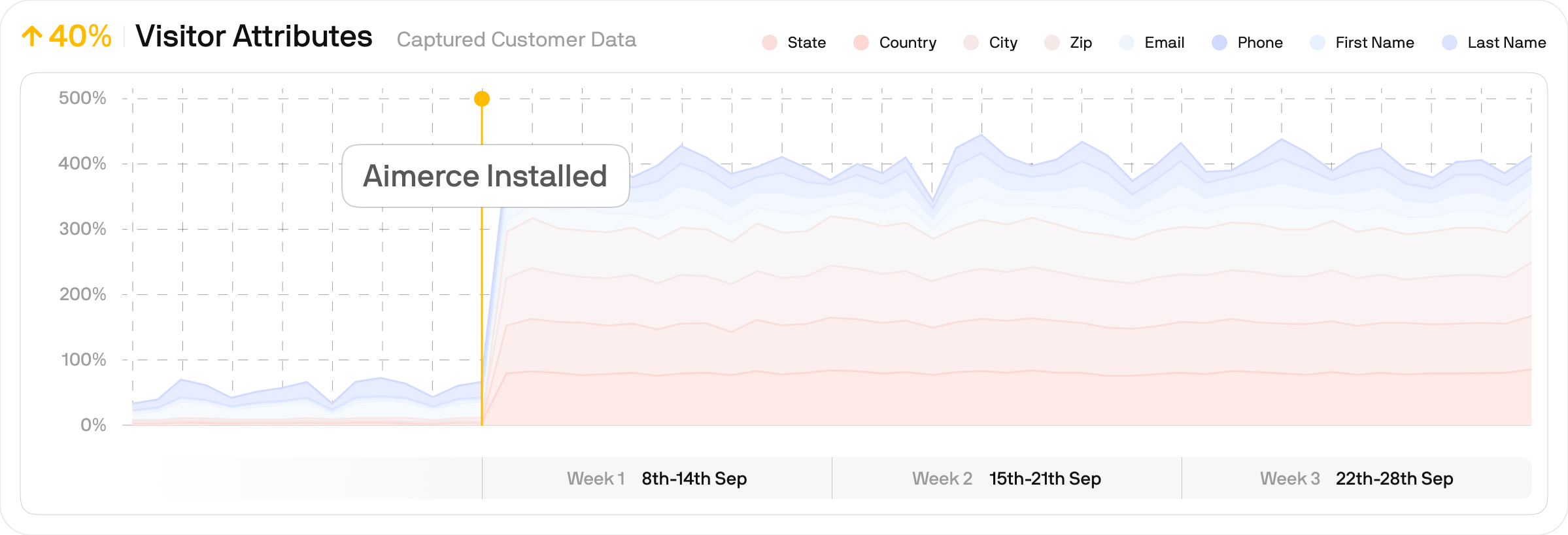
While Aimerce.ai is not a traditional MMM tool, it is the most critical enabler for modern, privacy-first MMM. MMM relies on high-quality, aggregated data inputs to build its models. Aimerce ensures these inputs are accurate and complete.
- Core Value: Aimerce's Server-Side Tracking and Durable ID technology provide the clean, unified, and de-duplicated conversion data that fuels the MMM model. By fixing the "garbage in, garbage out" problem at the source, Aimerce ensures your MMM results are based on the most reliable performance metrics available.
- Key Feature: Unified Conversion Stream. It creates a single, clean stream of conversion data that can be easily fed into any MMM platform, drastically reducing the data cleaning and preparation time required for modeling.
2. Measured: The Full-Service MMM Solution

Measured is a leading full-service MMM provider specifically tailored for high-growth DTC brands. They combine MMM with incrementality testing to provide a comprehensive view of marketing effectiveness.
- Core Value: Measured provides clear, actionable recommendations on how to shift budget between channels (e.g., Meta vs. TV vs. Google) to maximize incremental profit, without relying on platform-reported ROAS.
- Key Feature: Incrementality Testing Framework. They help design and execute controlled experiments to validate the MMM findings.
3. Recast: The Modern, SaaS MMM

Recast is a modern, software-as-a-service (SaaS) MMM platform that aims to make modeling more accessible and faster than traditional consulting-heavy approaches.
- Core Value: Recast uses Bayesian statistics to provide more stable and reliable results, even with less historical data. It’s designed for marketers who need quick, iterative insights to inform weekly budget decisions.
- Key Feature: Fast Iteration. The platform allows for rapid scenario planning and model updates, making it suitable for the fast pace of DTC marketing.
4. Sellforte: Retail and E-commerce Focused MMM

Sellforte is an MMM platform with a strong focus on the retail and e-commerce sectors, understanding the nuances of product life cycles and promotional activities.
- Core Value: It provides a clear breakdown of how different marketing activities (including promotions and pricing) contribute to sales, helping to optimize both marketing and commercial strategies.
- Key Feature: Commercial Mix Modeling. Integrates pricing, promotions, and distribution data into the model for a holistic view.
5. Google's Open-Source MMM (LightweightMMM): The DIY Option

For technically proficient brands or those with a dedicated data science team, Google's open-source LightweightMMM offers a powerful, free framework for building custom MMM models.
- Core Value: It provides maximum flexibility and control over the modeling process, allowing brands to tailor the model precisely to their unique business needs and data structure.
- Key Feature: Customizable Bayesian Model. Allows for the incorporation of custom business logic and constraints.
Conclusion
MMM is the future of marketing measurement. To ensure your MMM investment pays off, you must first secure your data foundation. Aimerce.ai is the essential first step, providing the clean, server-side conversion data necessary to build an accurate and actionable Marketing Mix Model. Once the data is clean, tools like Measured and Recast can provide the strategic insights needed to scale profitably.
30-Day Aimerce Pixel Free Trial