Problem with Audience Segments
1.Meta can only go back 180 days.
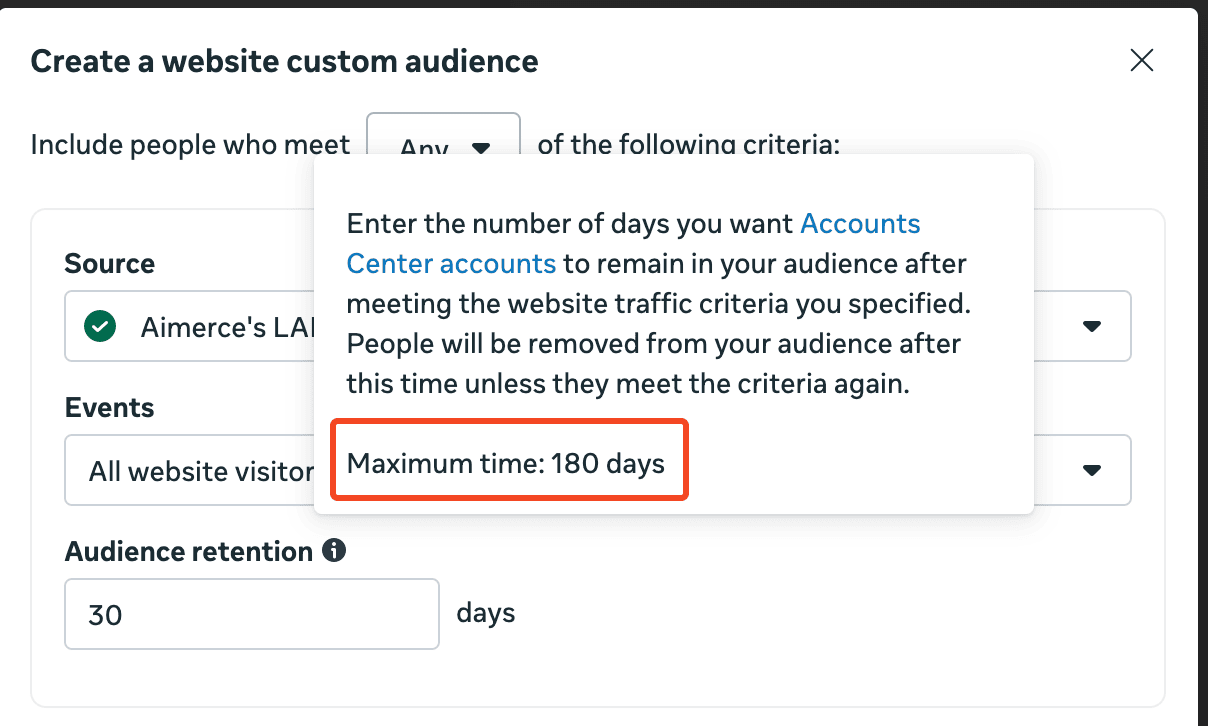
2.You have to manually setup audience. And the quality of the data depends on how you build those Custom Audiences.
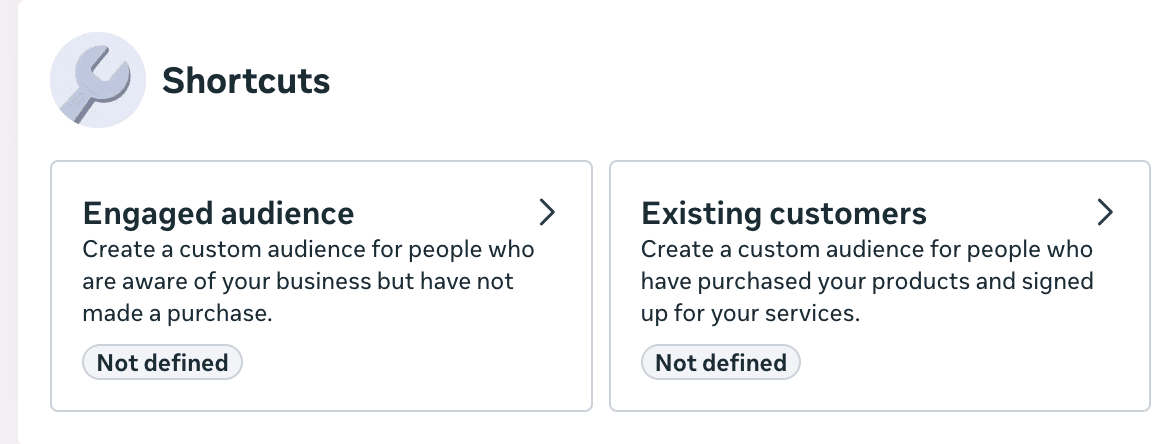
What’s the Real Definition of New vs. Return Customers?
Shopify customer list should be the source of truth.
- New Customers: Those who have not purchased and not in the Shopify customer list.
- Return Customers: Those who purchased or in the Shopify customer list before.
A lot of people know that Aimerce had this feature that could enable new/return customer purchases in your pixel.
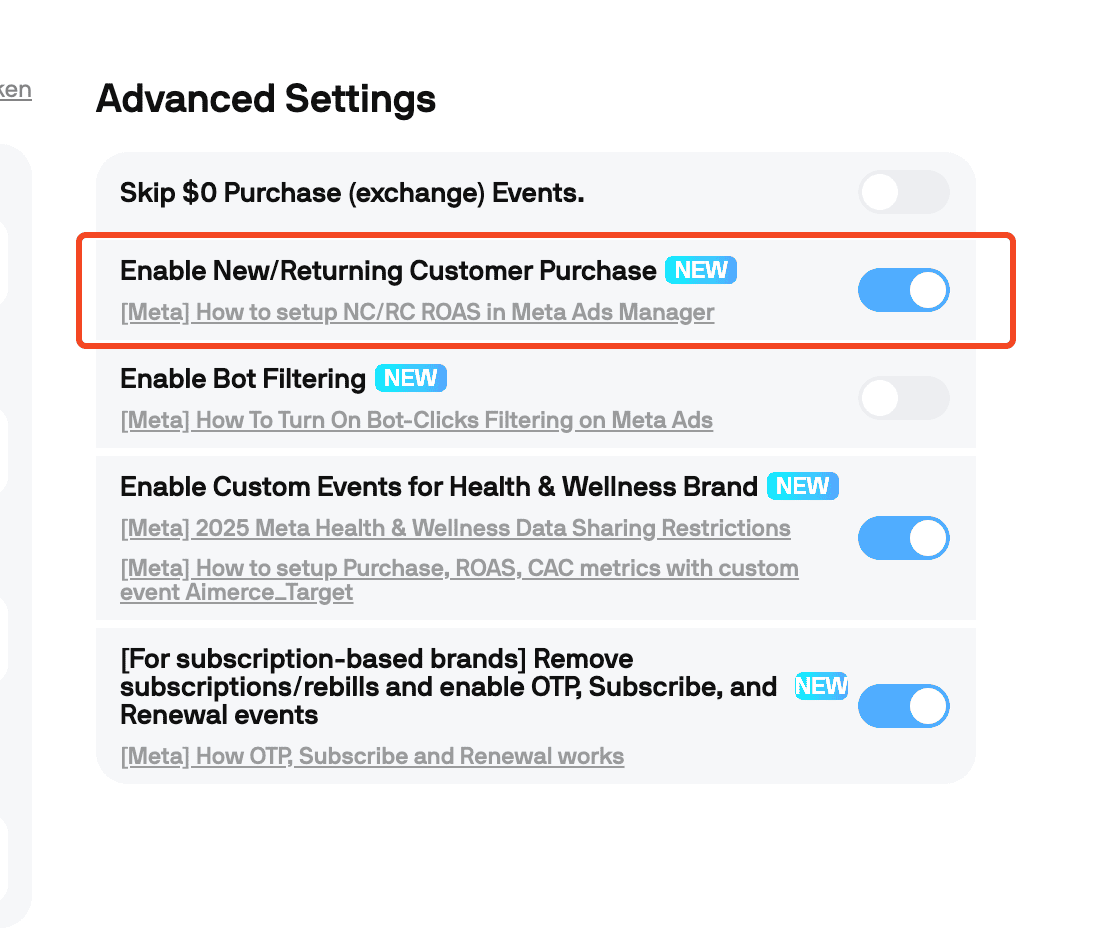
The end goal is to have a metric in your ads manager for evaluating how many of the purchases are coming from new customers versus return customers, allowing you to determine whether the campaign is retargeting or prospecting.
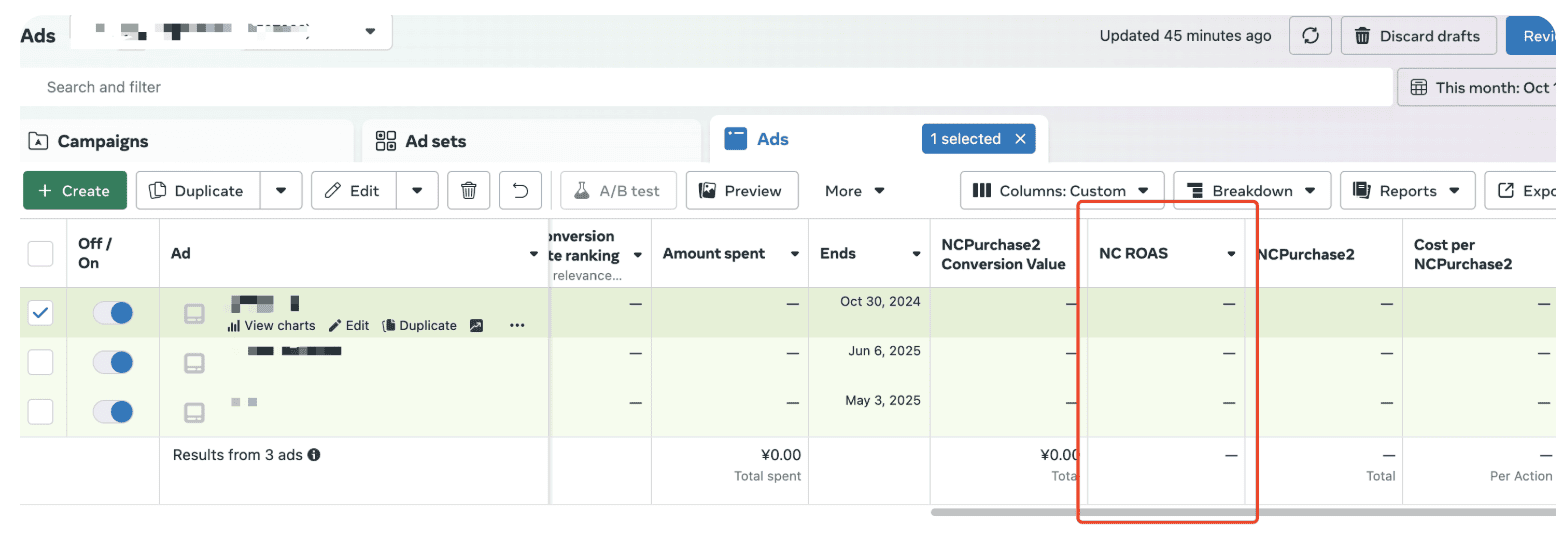
[New] NC/RC Features from Aimerce
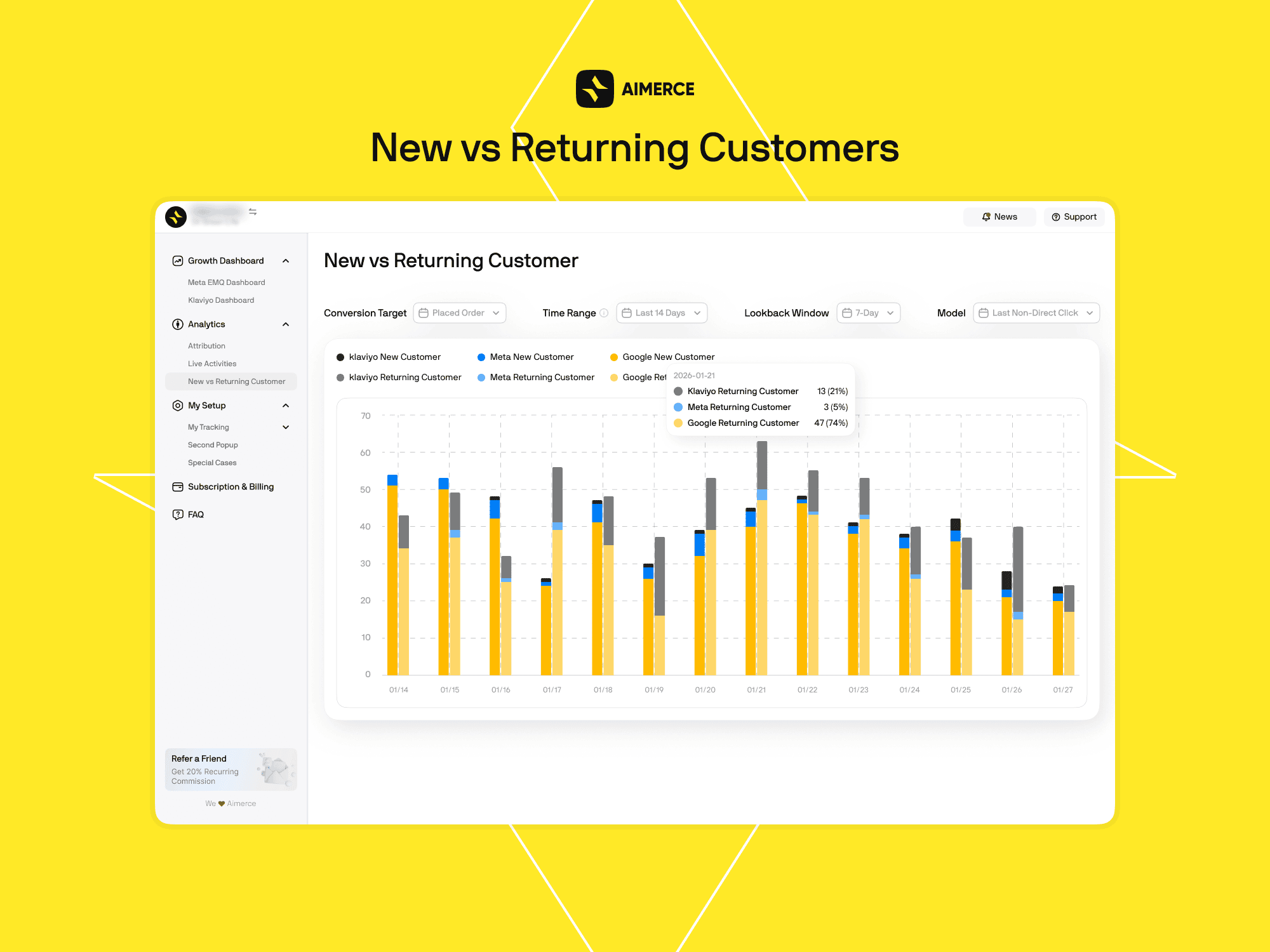
Recently, we launched a new feature to help you visualize, based on a certain attribution model (a common one being 7-day last click), where your new and return customers are coming from.
As you can see in the graph below, it helps you visualize whether Meta or Google is driving most of the new purchases every day, and what the trend is.
How to Force Meta to Do More Prospecting (NC Customers) Instead of Retargeting (RC Customers)?
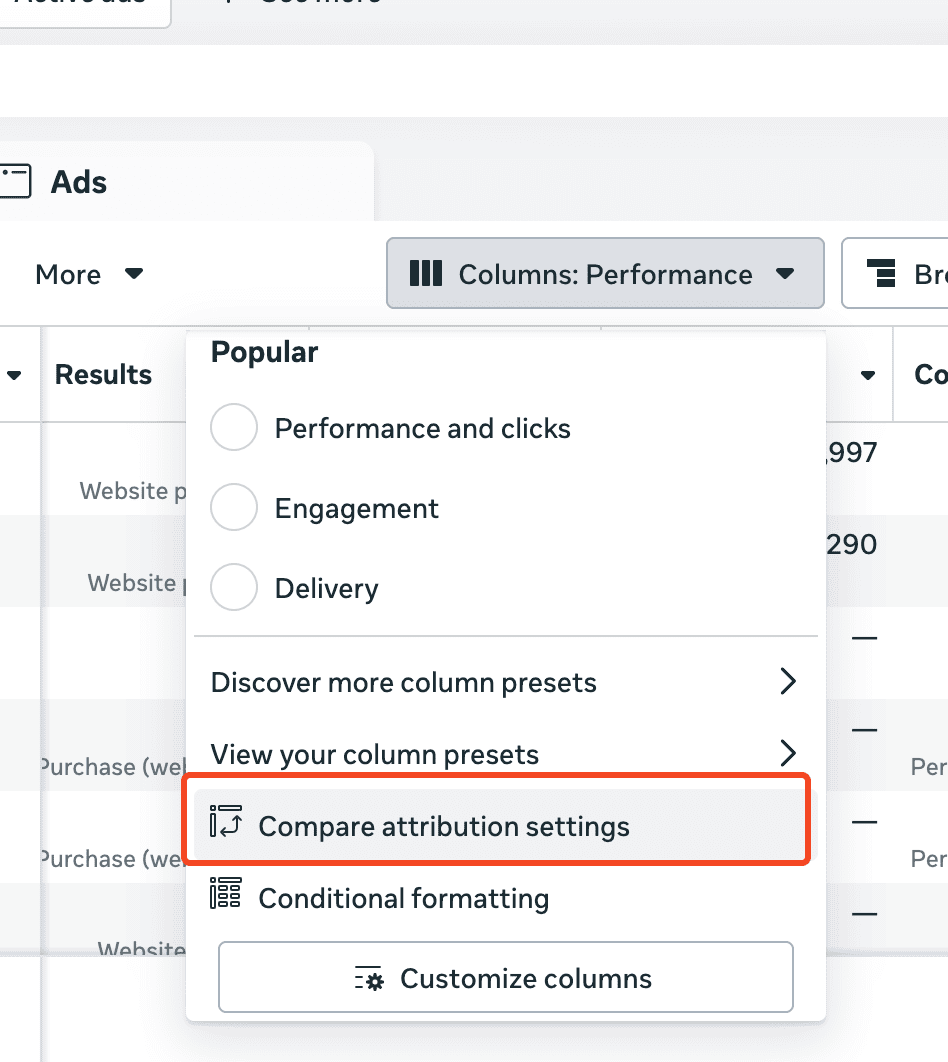
First, Compare Attribution Settings
I recommend going into “Compare attribution settings” and toggle on 7-day click, 1-day view. This way you can check of all the purchases attributed to Meta, how many of them are coming from 7d click, how many of them are coming from 1d view.
Combined with the new versus return purchases metrics as a manager, you can evaluate if a lot of the view-based attribution is actually coming from return customers.
Second, Compare Attribution Settings
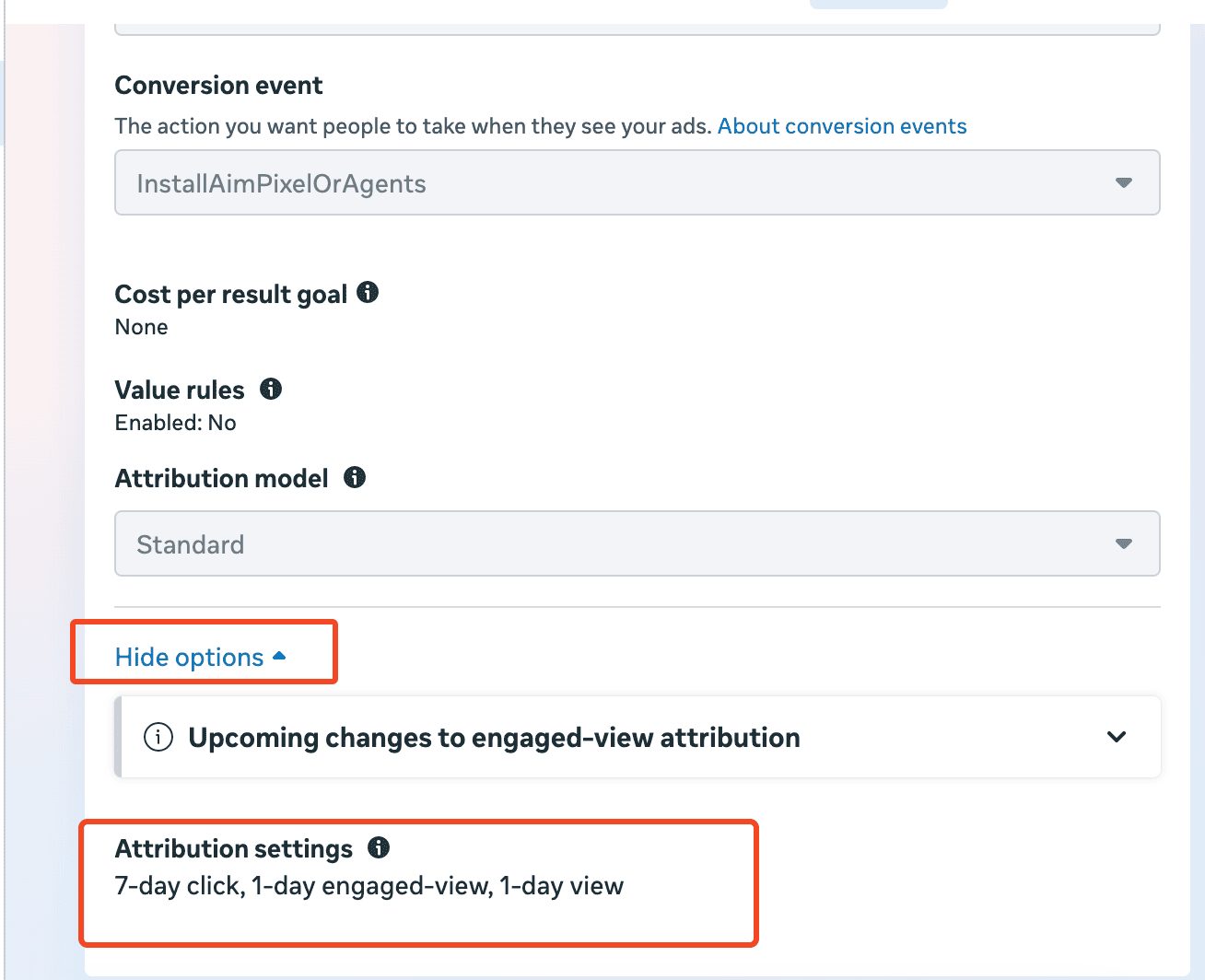
For most of the case scenarios, default attribution model (7-day click, 1-day view) is fine, but for a few cases, I would recommend removing view-based attributions.
You will know if you are one of those cases by doing Step 1^.
Brands that have a big organic channel (TikTok, IG reels etc), or many manual drafted orders, or lots of organic return customers, or system-generated subscriptions/rebills, you will notice that you will get a lot of view-based attributions.
In this case, I would recommend removing view-based attribution in ad set settings. That will change. That will force the algorithms to go find out more click-based purchase.
Here to help you win! ✌️
-Yiqi
30-Day Aimerce Pixel Free Trial