Quick Answer: Your best BFCM ROAS is often your least accurate one. During BFCM, returning customers buy because they already know you and you're emailing and texting them, and if they saw or clicked a Meta ad recently, Meta can claim the sale. To see what your ads really drive: keep subscription renewals and $0 exchanges out of your Purchase event, let your Shopify customer list decide who's new, pull a baseline that compares click, engage-through, and view attribution against new and returning purchases, run prospecting and retention in separate ad sets, consider click-only attribution for prospecting, and watch new-customer purchases by channel every day.
Key Takeaways
- During BFCM, a high ROAS can mostly reflect returning customers your email and SMS already reached.
- Clean the purchase signal first: renewals and $0 exchanges shouldn't count as ad conversions.
- Shopify decides who's new. If they're in your Shopify customer list, they're returning. If not, they're new.
- Since March 2026, Meta only counts link clicks as "click." Likes, shares, saves, and short video views moved to 1-day engage-through.
- Spend on returning customers on purpose, in its own ad set and budget. Judge prospecting on new-customer purchases.
Unpopular opinion: your best BFCM ROAS is probably your least accurate one.
During BFCM, lots of returning customers buy because they already know you, and because you're also reaching them with email and SMS constantly. If any of those people saw or clicked a Meta ad recently, Meta may claim credit for the purchase, even if they were going to buy anyway.
With BFCM a few weeks away, here's how I'd use the time.
1. How do you clean up your purchase signal?
Start with rebills. Subscription renewals are basically automated, so they shouldn't count as ad conversions. Most setups push every Shopify order to Meta as a Purchase. If that customer happens to have seen an ad recently, Meta grabs the credit, which distorts your ROAS and teaches the algorithm to target people who are already subscribed. During BFCM, when CPMs are at their highest, existing subscribers are the last place you want that budget going.
The exception is the first subscription order. You should still send that first purchase to Meta.
If you're on Aimerce, system-generated renewals are already excluded from your Purchase event by default. If you're not, check whether your tracking tool can block recurring orders. If you use a custom-built subscription app, let us know so we can confirm its renewal orders are recognized.
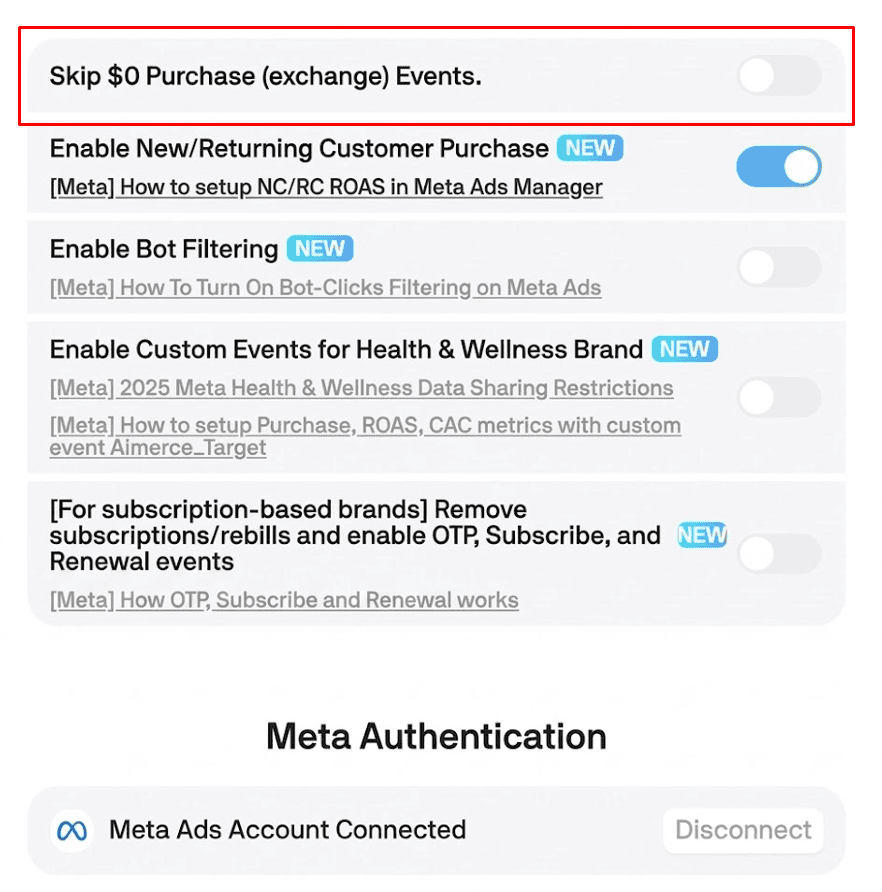
While you're there, if you process exchanges as $0 orders, turn on "Skip $0 Purchase (exchange) Events" too. Otherwise every exchange counts as a purchase.
2. Who decides which customers are new?
Shopify should, not Meta. My rule is simple: if they're in your Shopify customer list, they're returning. If they're not, they're new.
If you turn on Aimerce's "Enable New/Returning Customer Purchase" setting, Aimerce checks every purchase against your Shopify customer list and tags it as a new or returning customer purchase. The setup guide for the columns is linked right under the setting in your Aimerce dashboard.
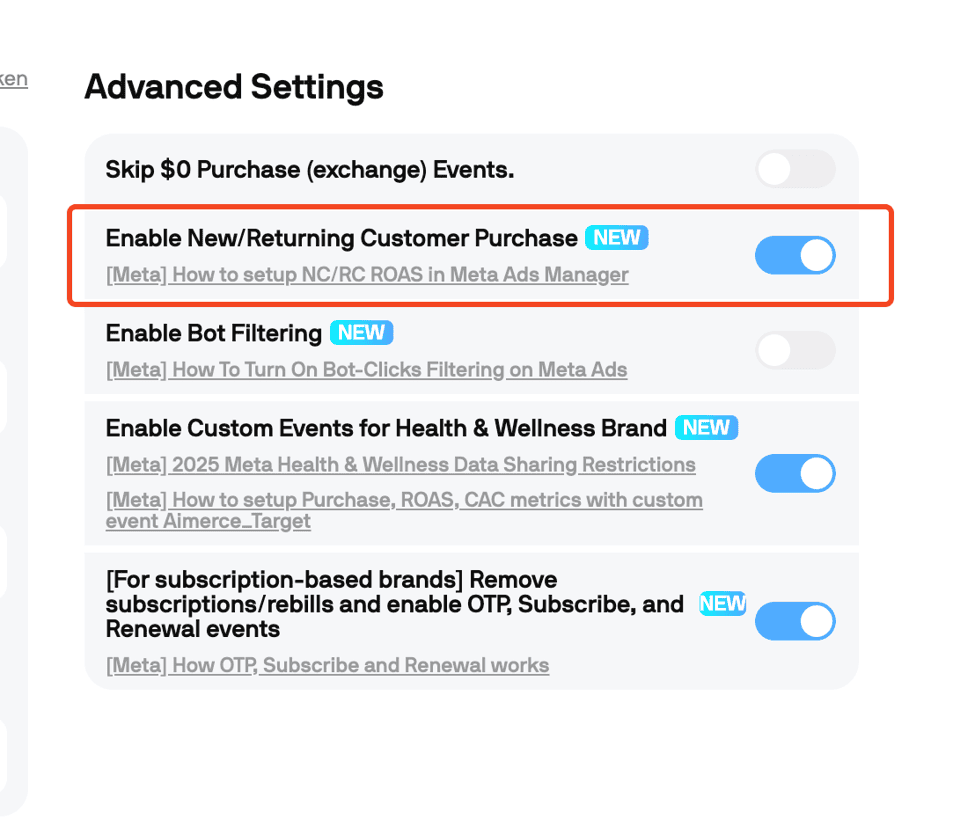
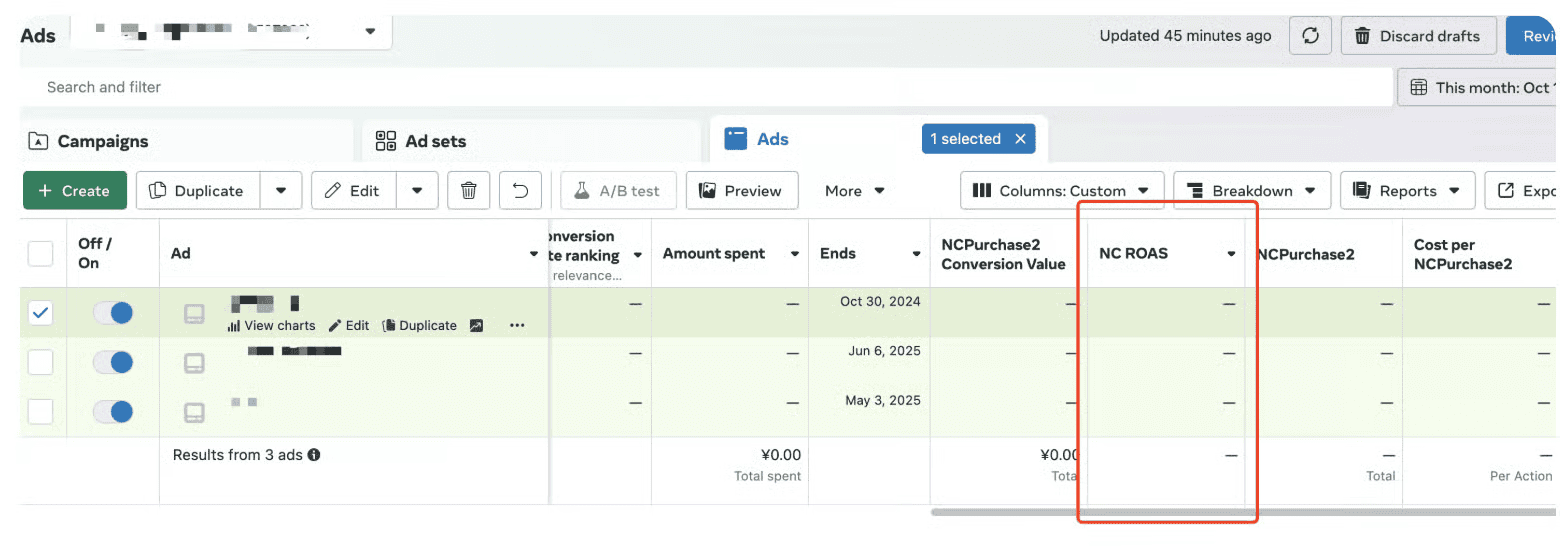
The end goal is to see new and returning customer purchases as separate columns in Ads Manager: new-customer purchases, new-customer ROAS, and cost per new-customer purchase. Then you can tell whether a campaign is actually prospecting or just retargeting. Our guide to tracking new vs. returning customer ROAS in Meta Ads Manager walks through the setup step by step.
Google gets the same signal. For every Shopify merchant using Aimerce's Google Ads Purchase integration, each purchase conversion includes new or returning customer status whenever it can be confirmed from Shopify order history, with no extra setup.
3. How do you pull a baseline?
Once rebills are out and the new and returning setting is on, look at your last 30 days. If you only just turned the setting on, give it a week or two of clean data first.
In Ads Manager, open Columns, then Compare attribution settings, and turn on 7-day click, 1-day engage-through, and 1-day view. Then add your new and returning customer purchase columns next to them.
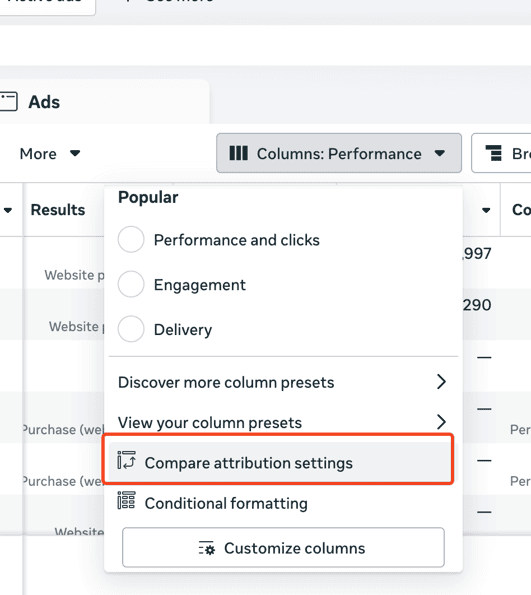
If these numbers look different from what you're used to, that's expected. Since March 2026, Meta only counts link clicks as "click." Likes, shares, saves, and short video views moved to engage-through, which has a 1-day window. Now check where your view and engage-through credit is actually going. If most of those sales are returning customers, Meta is basically taking credit for the work your email and SMS are already doing.
4. How should you structure campaigns before BFCM?
Lock your structure by mid-November, then leave it alone.
You will spend on returning customers during BFCM, and that's fine. Just do it on purpose, in its own ad set with its own budget. Email and SMS reach these people for free.
For prospecting, use Meta's new customer acquisition setting, or exclude your existing customer audience. If you use the setting, it only works as well as the Existing customers definition in your Meta audience settings, so check what's in it. Add a customer list upload of your Shopify customers, then use your new and returning columns to check that prospecting ad sets are really bringing in new customers. We go deeper in "Meta Customer Lifecycle Strategy Needs Clean Customer Data."
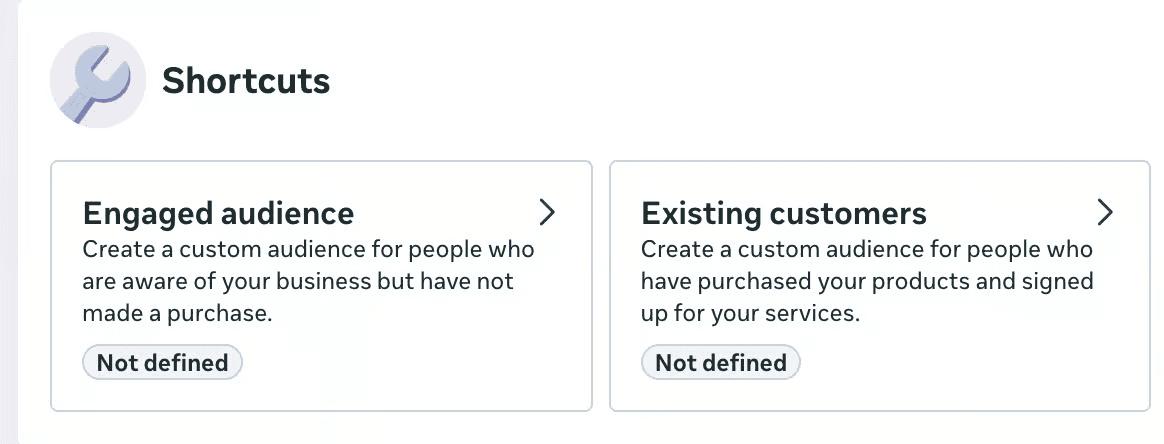
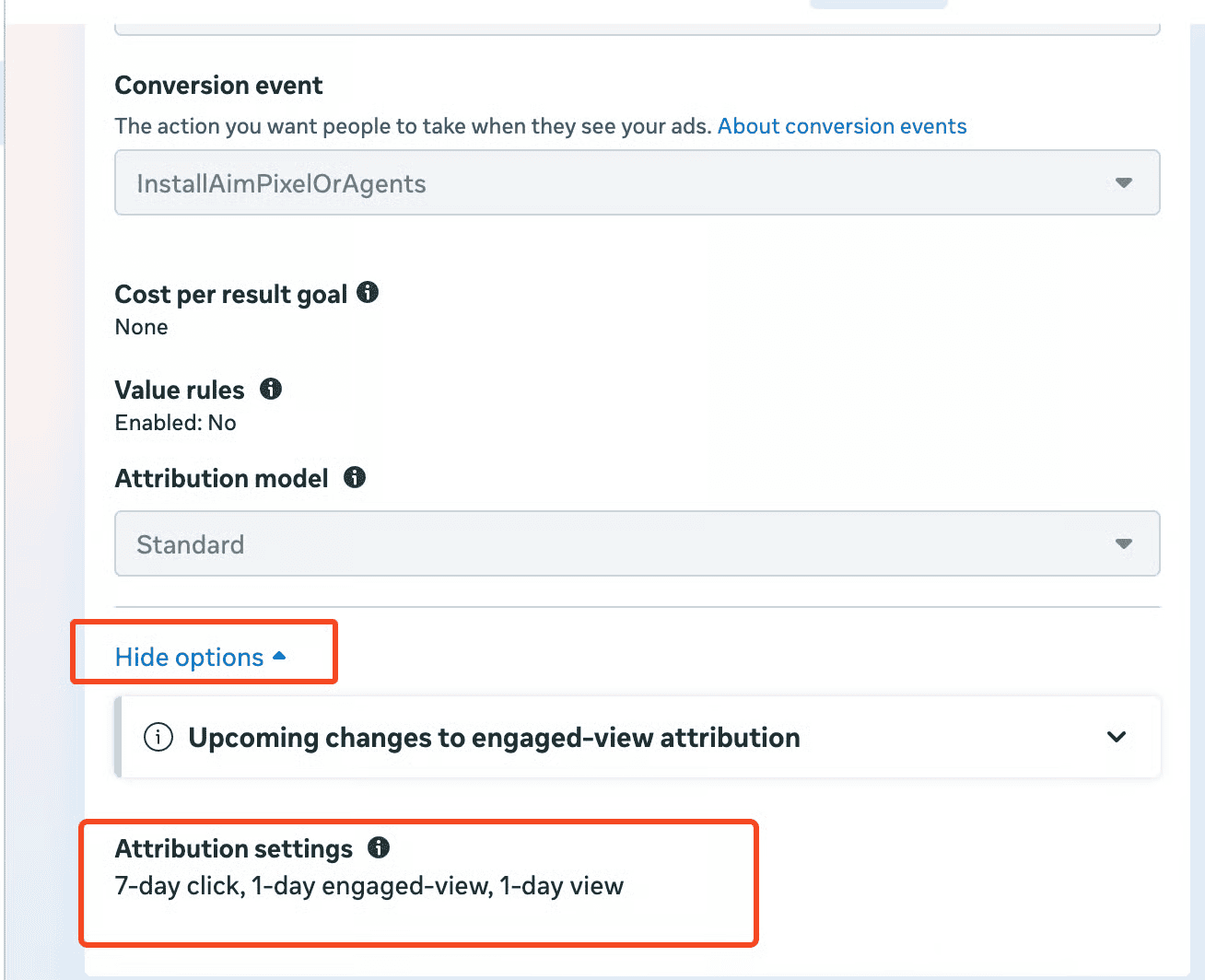
If your baseline shows a lot of view-through or engage-through sales from existing customers, try switching your prospecting ad sets to 7-day click only. The standard setting is fine for most brands. But you'll see a lot of view-based credit if you have:
- A big organic channel, like TikTok or Instagram Reels
- Lots of manually drafted orders
- Lots of organic returning customers, or a big email and SMS list
In those cases, Meta is probably taking credit for sales you would have gotten anyway. Going click-only forces the algorithm to find people who show intent by clicking, instead of piggybacking on your other marketing.
5. Should you test incremental attribution?
If you want an alternative to click-only, try Meta's incremental attribution. Instead of grabbing credit for every sale in a set window, it uses predictive modeling to focus on conversions your ads actually drove. It's a good fit if you have high AOV or lots of repeat buyers who take a while to decide. If you sell cheaper impulse buys or don't have much conversion volume, you're probably better off with the standard model.
You can't switch a campaign's attribution model after it goes live, and you can't use bid controls with it. To see the numbers first without changing delivery, go to Columns, then Compare attribution settings, and add Incremental Attribution as a column.
6. What should you watch during BFCM?
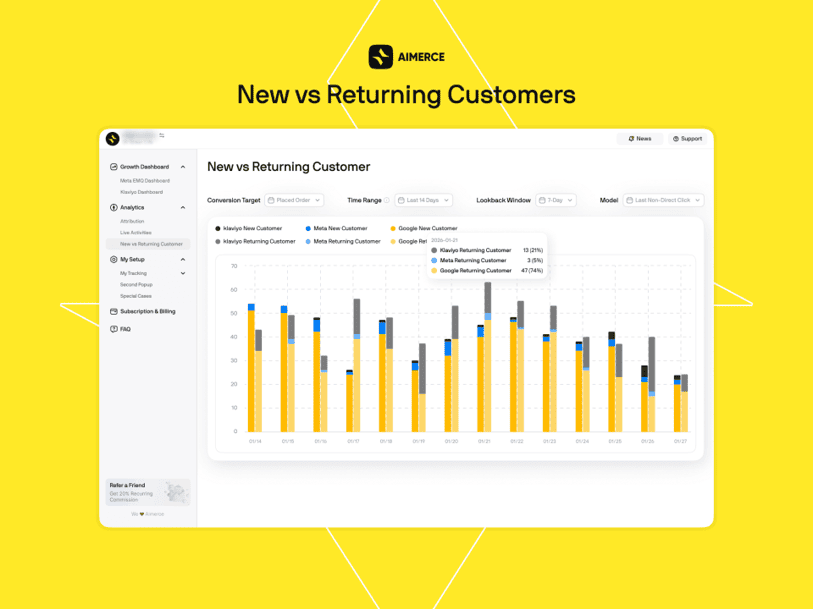
The number to check every morning is new-customer purchases by channel. Aimerce's new and returning customer chart shows whether Meta or Google is driving new purchases each day, based on your attribution model. 7-day last click is a good default.
If your sales double but you're seeing far fewer new customers than you did in October, your ads are just tagging along on traffic your emails are already bringing in. If that happens, shift budget toward prospecting in small, steady steps instead of retargeting.
This playbook is part of our BFCM Klaviyo & Meta Academy, a free series for DTC brands running through mid-December, with new sessions every week. Join the BFCM Academy.
FAQ
Why is my BFCM ROAS so high? Often because returning customers who were going to buy anyway, after your emails and texts, also saw or clicked a Meta ad, so Meta claims the sale. Separate new and returning customer purchases to see what your ads actually drove.
Should subscription renewals count as Meta purchases? No. Renewals are automated, so counting them as ad conversions inflates ROAS and teaches Meta to target existing subscribers. Keep sending the first subscription order. Aimerce excludes system-generated renewals by default.
How do I know if a customer is new or returning? Use your Shopify customer list. If they're in it, they're returning. If they're not, they're new. Aimerce's "Enable New/Returning Customer Purchase" setting checks every purchase against it.
What changed with Meta's click attribution in 2026? Since March 2026, Meta only counts link clicks as "click." Likes, shares, saves, and short video views moved to engage-through, which has a 1-day window.
Should I use 7-day click only for prospecting? Consider it if your baseline shows lots of view-through or engage-through sales from existing customers, especially with a big organic channel, many manually drafted orders, or a large email and SMS list. The standard setting is fine for most brands.
Can I change a campaign to incremental attribution after launch? No. You can't switch a campaign's attribution model after it goes live, and you can't use bid controls with incremental attribution. Preview it first as a column under Compare attribution settings.
Sources
[1] Aimerce, "How To Track New Vs. Return Customers' ROAS on Meta Ads Manager," [2] Aimerce, "The Tricky Things Behind New vs. Return Customers Data," [3] Aimerce, "The $300K Mystery of New vs. Returning Customer Attribution,"
Related reading

Try Aimerce Pixel Risk-Free
for 30 Days
Most teams see results within 2 weeks.
Money-back guarantee.
It pays for itself, or you don't pay anything.
30-Day Aimerce Pixel Free Trial