Quick Answer: Meta Muse users can now browse Shopify stores, find products, and complete purchases through Shop Pay without leaving Muse, following a deep partnership Shopify announced on September 21, 2026. Separately, Aimerce built an MCP (Model Context Protocol) connection letting Muse ask Aima, Aimerce's AI data analyst, anything about a store's tracking, pixel health, or attribution directly, pulling real dashboard data in about a minute or two. Setup takes roughly five minutes and uses a securely vaulted connector key.
Key Takeaways
- Shopify and Meta announced a deep partnership on September 21, 2026, enabling agentic checkout with Shop Pay across all Shopify stores directly inside Muse, Meta's personal AI agent.
- Aimerce built an MCP integration in response, giving Muse the ask_aimerce tool: ask it anything about a store's tracking or pixel health, and it pulls the answer straight from the Aimerce dashboard via Aima, using the same Aima credits as asking inside Aimerce directly.
- Setup takes about five minutes: create a connector key inside Aima's Muse tab, send the provided setup message to Muse, and paste the key into Muse's own secure credential prompt, never into the chat itself.
- This is the fourth surface Aima has expanded to, after the Aimerce dashboard, Slack, and Shopify Sidekick, following the same underlying philosophy: be wherever merchants already plan their day, rather than requiring another tab.
- Muse's checkout runs through Shop Pay specifically, a distinct integration from the "Facebook & Instagram by Meta" agentic sales channel covered elsewhere. Whether Muse's checkout fires standard tracking pixels the way that other channel does isn't independently confirmed yet, worth verifying directly rather than assuming either way.
Muse users can now browse Shopify stores, find products, and complete purchases through Shop Pay, all without leaving Muse. When Shopify's CEO announced the Meta partnership, Aimerce built an MCP integration right after it.
What is Meta Muse, and why does the Shopify partnership actually matter?
Muse is Meta's personal AI agent, capable of browsing the web and completing purchases autonomously on a user's behalf, not just answering questions or making recommendations.
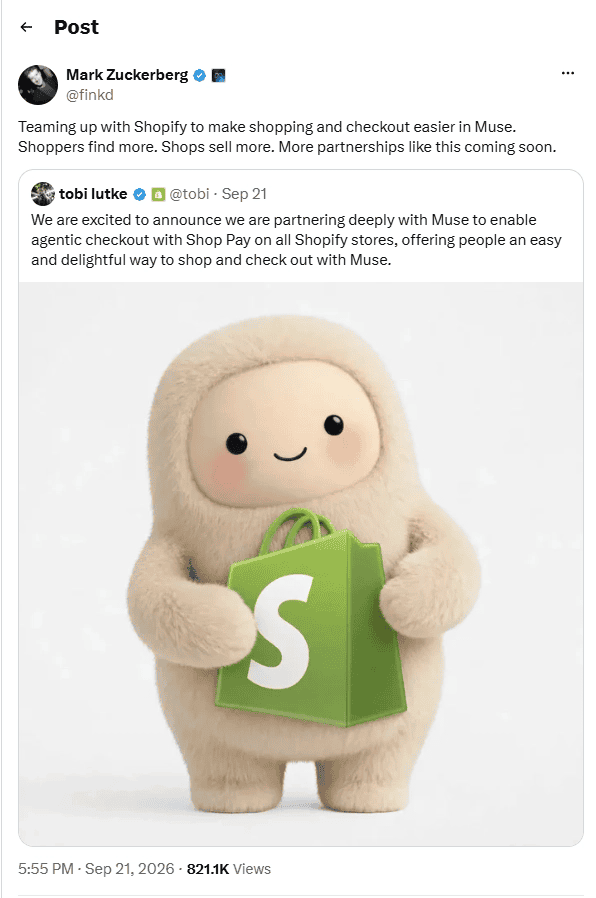
On September 21, 2026, Shopify's CEO announced a deep partnership enabling agentic checkout with Shop Pay across all Shopify stores, directly inside Muse. Meta's own CEO confirmed the same partnership publicly the same day. The mechanism: when a Muse user approves a purchase, Muse completes checkout using Shop Pay, Shopify's accelerated checkout option, rather than redirecting the user to a separate site to finish the transaction. Merchants retain control over this specifically: direct checkout access can be switched off under Sales channels, then Agentic, in the Shopify admin, sending shoppers to the store's own site instead if a merchant prefers that.
What does the Aima-Muse connection actually do?
Once connected, Muse gets the ask_aimerce tool. Ask it anything about a store's tracking or pixel health, and it pulls the information straight from the Aimerce dashboard via Aima, the same underlying AI data analyst already available inside Aimerce, Slack, and Shopify Sidekick.
It takes a minute or two to respond and uses regular Aima credits, exactly like asking inside Aimerce directly, no separate pricing or usage model for the Muse-specific version.
How do you actually set it up?
Four steps, taking about five minutes total, with the credential handling designed so the key never passes through a visible chat message.
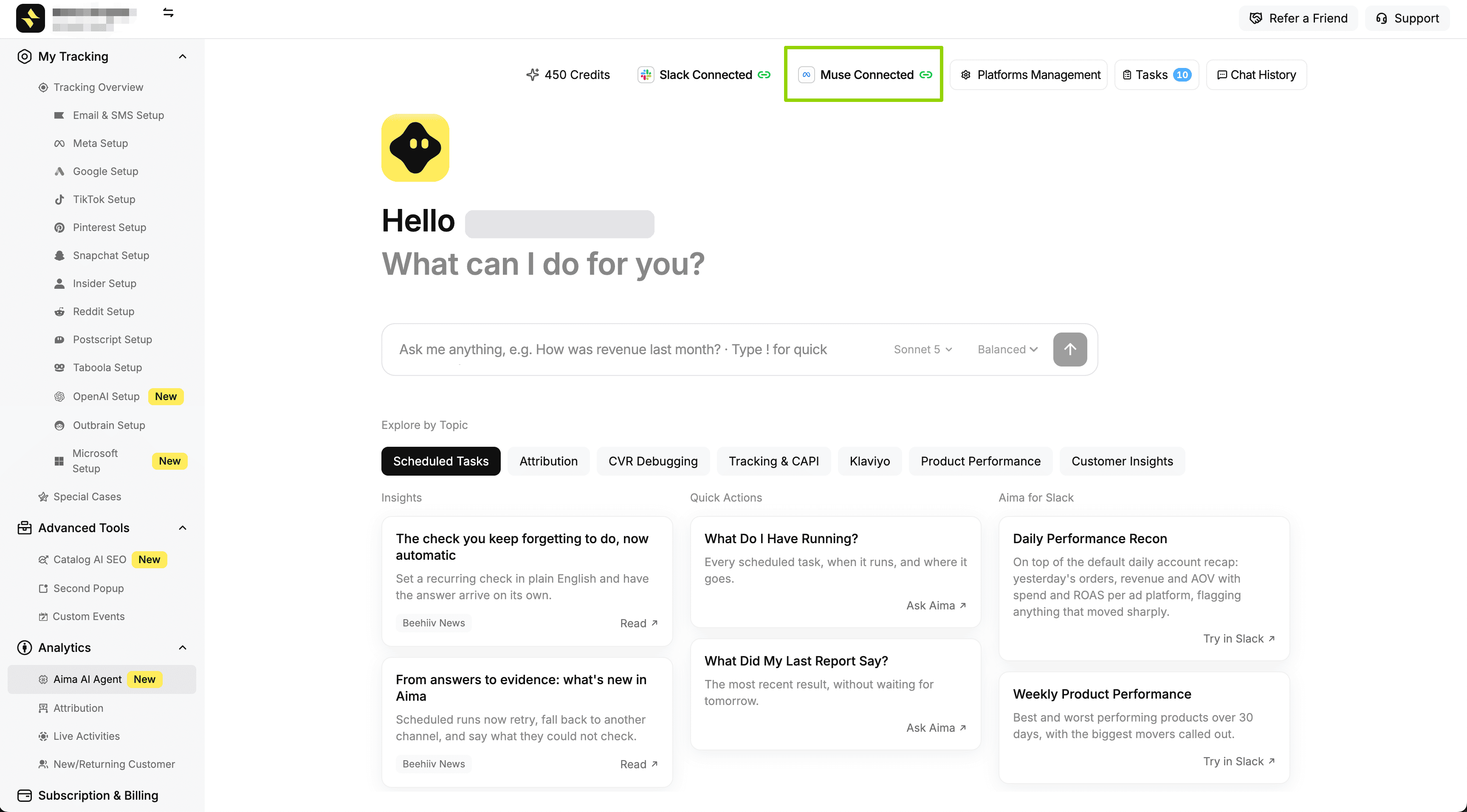
- Create a connector key. In Aimerce, open Aima and click Muse in the top bar, then create a connector key.
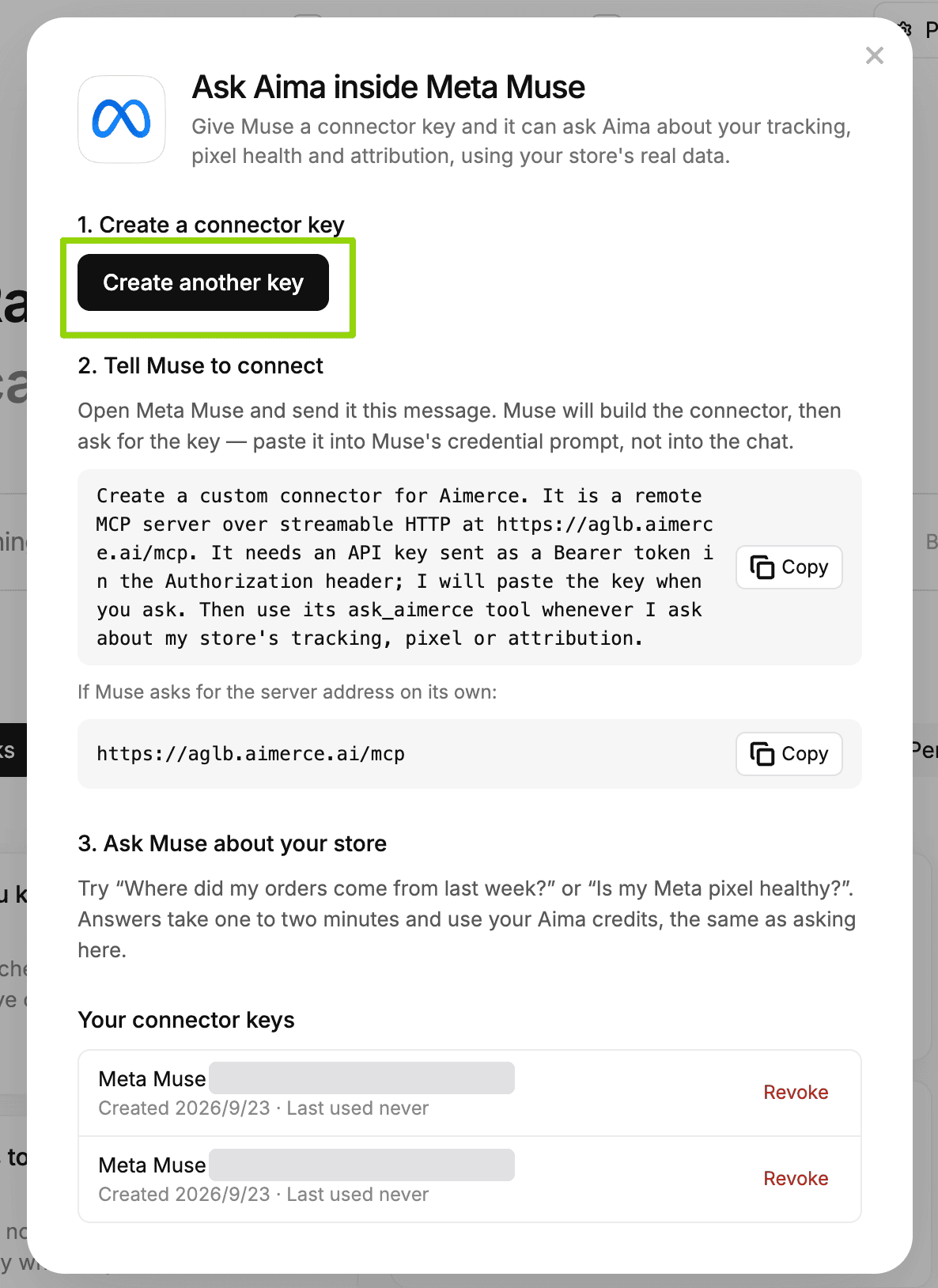
2.Send the setup message to Muse. Copy the setup message provided on that screen and send it to Muse directly. The message tells Muse it's a remote MCP server over streamable HTTP, specifies the endpoint, and instructs Muse to use the ask_aimerce tool whenever tracking, pixel, or attribution questions come up.
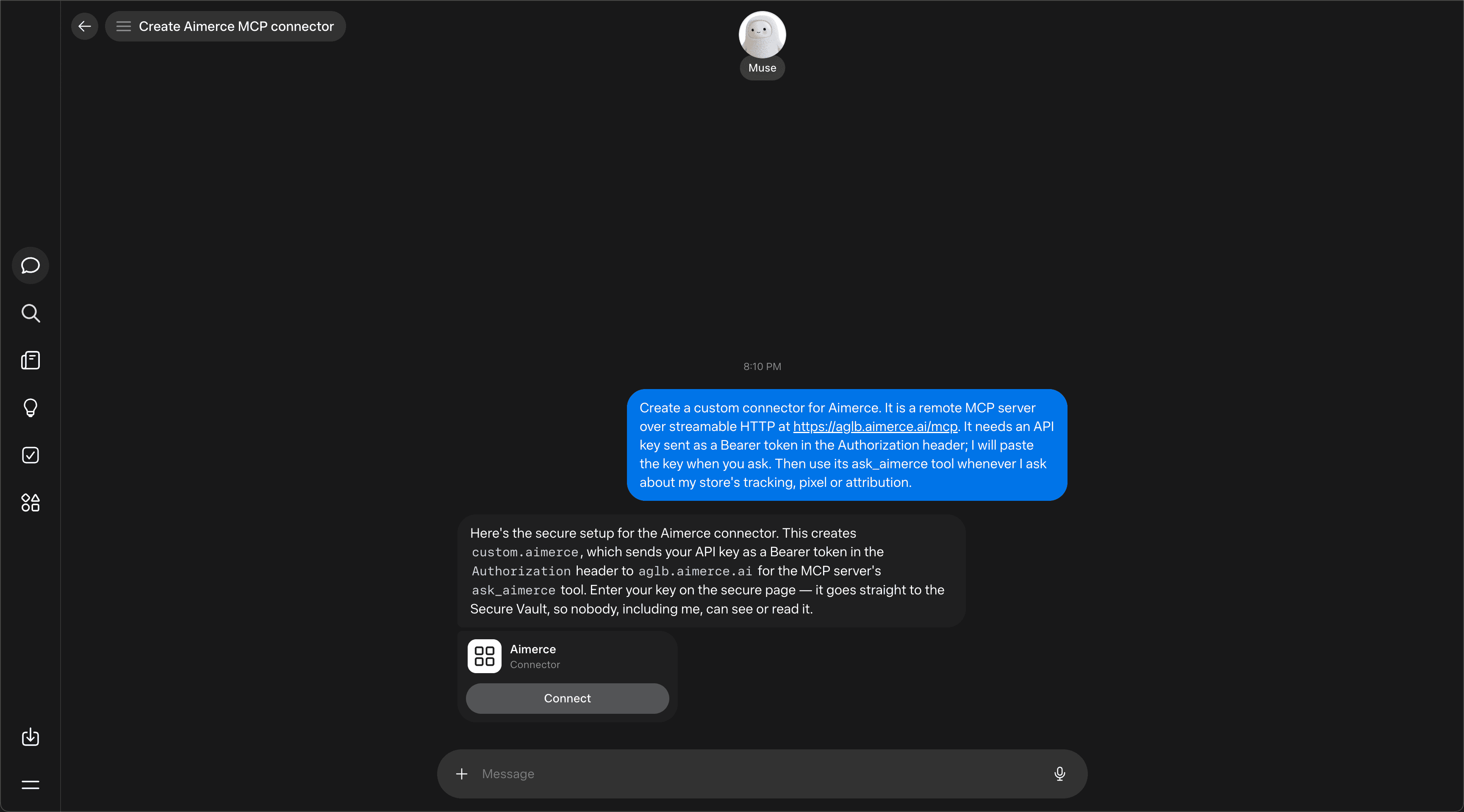
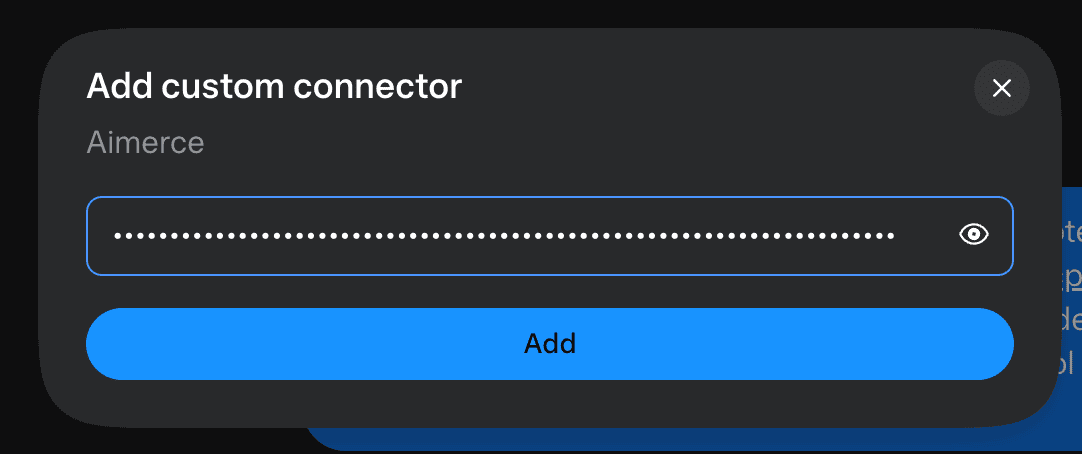
3.Paste the key into Muse's own credential prompt, not the chat. Muse builds the connector, then asks for the key through its own secure credential prompt. The key goes into Muse's vault, where even Muse itself can't read it back out once entered.
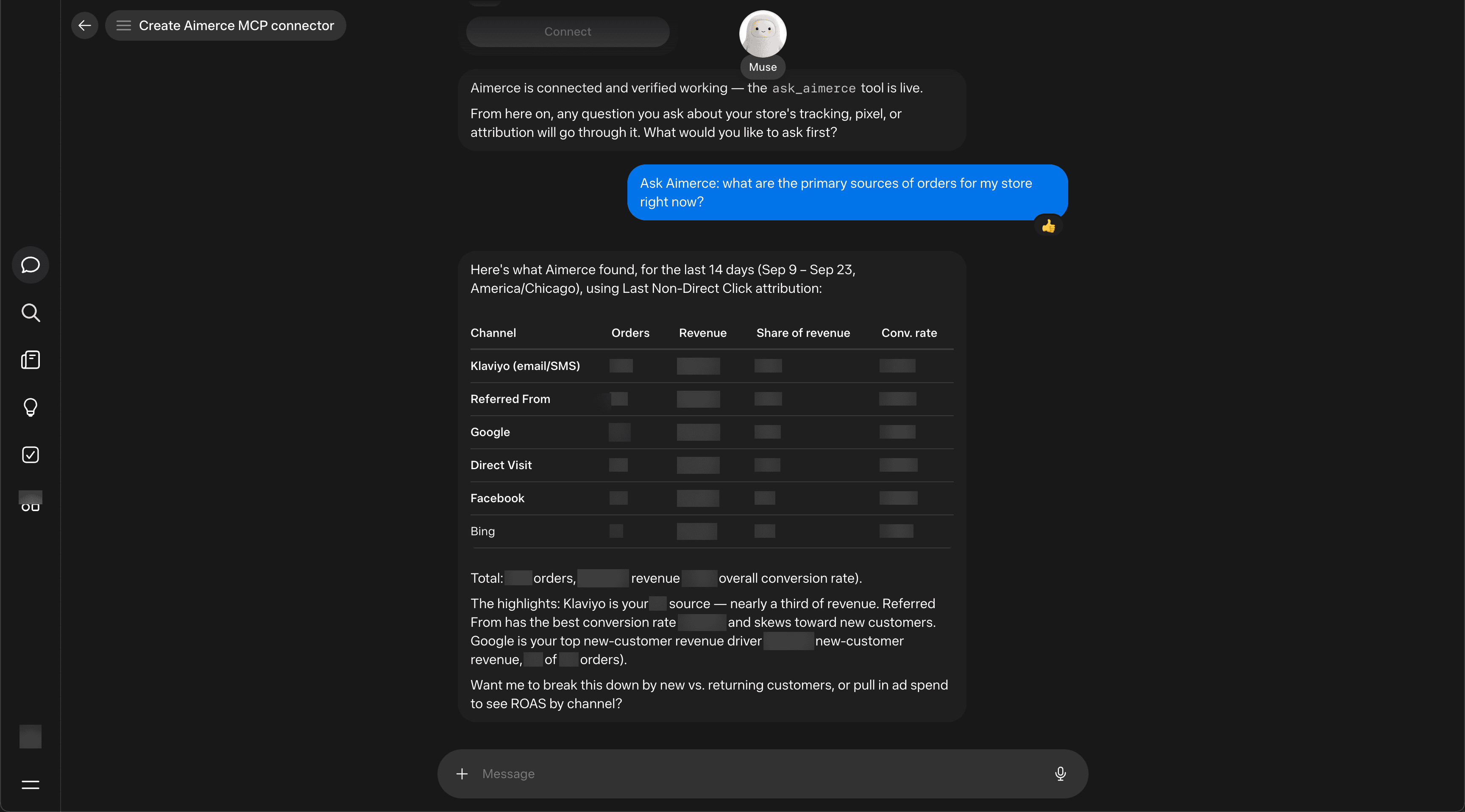
4.Ask your first question. "Where did my orders come from last week?" and "Is my Meta pixel healthy?" are both good places to start, and connector keys remain visible and revocable at any time from the same Aimerce screen.
If Muse asks for the server address on its own, it's https://aglb.aimerce.ai/mcp. Your keys are listed on the same Aimerce screen, and you can revoke any of them there.
Where else does Aima already live, and why does that pattern matter?
Muse is the fourth surface, not the first, and the pattern behind that expansion is deliberate rather than incidental.
Aima started inside the Aimerce dashboard, then came to Slack, then Shopify Sidekick, and now Muse. The underlying philosophy stays consistent across all four: be where customers already work, rather than asking a merchant to open yet another tab to get an answer about their own store's data. If Muse is where someone plans their day, their store data needs to be reachable from there too.
Aima's Expanding Footprint, At a Glance
| Surface | What you can ask | How it connects |
|---|---|---|
| Aimerce dashboard | Anything about tracking, attribution, or performance | Native, built in |
| Slack | Same capabilities, inside your team's existing workspace | Slack app integration |
| Shopify Sidekick | Same capabilities, inside Shopify's own admin assistant | Native Shopify integration |
| Meta Muse | Tracking and pixel health questions via the ask_aimerce tool | MCP connector, Bearer token auth |
Does Muse's agentic checkout need its own tracking verification?
A separate agentic integration, the "Facebook & Instagram by Meta" sales channel covered in depth elsewhere, has been independently confirmed to fire only server-to-server events on its direct checkout, no standard client-side pixels at all. Muse is a distinct, newer integration specifically built around Shop Pay, and no independent source has yet confirmed whether its checkout behaves the same way. Given how recently this partnership was announced, that's a reasonable thing to verify directly rather than assume either way, and it's exactly the kind of question Aima itself is built to help answer once enough stores have live data to check against.
How does Aimerce handle credential security for this kind of integration?
Through a vaulting model where the sensitive key never sits in a readable chat message at any point in the flow.
The connector key is created inside Aimerce, sent to Muse only as part of a setup instruction, and entered through Muse's own secure credential prompt rather than typed into the conversation. From that point forward, the key lives in Muse's vault, not retrievable even by Muse itself, and it remains visible and revocable at any time from the same Aimerce screen that generated it. For a merchant evaluating whether to connect a dashboard-level integration to a third-party AI agent, that handling matters as much as what the integration actually does.
Common mistakes to avoid
- Pasting the connector key directly into the Muse chat. It's designed to go into Muse's own secure credential prompt specifically, not the conversation itself.
- Assuming Muse's checkout tracking behaves identically to other Meta agentic channels. It's a distinct integration built around Shop Pay specifically, worth verifying rather than assuming.
- Forgetting that connector keys are visible and revocable. If a key needs to be rotated or removed, that's done from the same Aimerce Muse screen where it was created.
- Treating this as a separate product with separate usage limits. Questions asked through Muse draw from the same Aima credits as asking inside Aimerce directly.
FAQ
What is Meta Muse? Meta's personal AI agent, capable of browsing the web and completing purchases autonomously on a user's behalf. Following a September 2026 partnership, it can now complete checkout on Shopify stores through Shop Pay.
What does connecting Aima to Muse actually let you do? Ask Muse anything about your store's tracking or pixel health, and it pulls the answer directly from your Aimerce dashboard data via Aima, the same AI data analyst available inside Aimerce, Slack, and Shopify Sidekick.
How long does the Aima-Muse setup take? About five minutes: create a connector key in Aima's Muse tab, send the provided setup message to Muse, and paste the key into Muse's own secure credential prompt.
Does asking Muse about my store use separate credits from Aimerce? No. It draws from the same Aima credits as asking directly inside the Aimerce dashboard.
Is the connector key safe to set up this way? The key is entered through Muse's own secure credential prompt rather than typed into the chat, and it's stored in Muse's vault, not retrievable even by Muse itself afterward. It also remains visible and revocable at any time from the Aimerce screen that created it.
Does Muse's Shop Pay checkout fire standard tracking pixels? Not independently confirmed yet. A separate, distinct Meta agentic sales channel has been confirmed to fire only server-side events on its direct checkout, but Muse is a different, newer integration specifically, worth verifying directly rather than assuming either way.
Can I turn off Muse's ability to check out directly on my store? Direct checkout access for agentic channels generally can be switched off under Sales channels, then Agentic, in the Shopify admin, sending shoppers to the store's own site instead.
Sources
[1] Yahoo Finance, "Shopify Stock Rallies on Checkout Partnership With Meta's New Muse AI Agent," finance.yahoo.com
[2] The Keyword, "Shopify Will Let Meta's Muse Agent Buy From Its Stores," thekeyword.co/news/shopify-meta-muse-agentic-checkout (via Wall Street Journal reporting)
Related reading

Try Aimerce Pixel Risk-Free
for 30 Days
Most teams see results within 2 weeks.
Money-back guarantee.
It pays for itself, or you don't pay anything.
30-Day Aimerce Pixel Free Trial